
Where to Stay in Tenerife: Best Areas and Bases Compared
Choose where to stay in Tenerife by comparing Costa Adeje, Los Cristianos, Los Gigantes, Puerto de la Cruz and Santa Cruz for beaches, culture and transport.
AI-assisted guide · Sources and editorial policy
On this page
Deciding where to stay in Tenerife starts with one choice: the sunnier, resort-built south or the greener, more historic north, with the capital Santa Cruz as a third, urban option. Turismo de Tenerife's guide to the island's towns divides Tenerife into a Northern, a Southern and a Metropolitan area spread across 31 municipalities.
This guide compares the main bases: Costa Adeje, Los Cristianos and Playa de las Américas, Los Gigantes and Puerto Santiago, Puerto de la Cruz, and Santa Cruz with La Laguna. Our short verdict: book the south if beach time and resort facilities top your list, and the north or the capital if old streets, gardens, local life and easy public transport matter more.
North or South Tenerife: The First Decision
The south, led by Adeje and Arona, is where the tourism board places much of the island's holiday infrastructure: beaches, leisure, shopping and a wide range of hotels. It describes this side of Tenerife as known for a sunnier climate and large tourist zones, while traditional inland villages and volcanic scenery survive behind the coast. As a rule, the south logs more hours of sunshine, lower humidity and steadier temperatures for much of the year.
In the north, Puerto de la Cruz, La Orotava, Los Realejos, Icod de los Vinos and Garachico sit among green landscapes, historic centres, farmland and traditional villages. The air is more humid and the vegetation lush; temperatures are just as mild, but cloud is more likely at certain times of year. For travellers who want a quieter, more historic atmosphere or green surroundings, the board names Puerto de la Cruz and La Orotava as popular choices.
The third option is the Metropolitan area: Santa Cruz de Tenerife and San Cristóbal de La Laguna, two of the three most populated cities in the Canary Islands. Our advice is to pick the mood first (resort beach, historic green north or city) and the town second.
Costa Adeje: Polished Resort Base in the South-West
Adeje lies in the south-west, and the tourism boom of the second half of the twentieth century turned its coastline into one of Europe's best-known holiday destinations. According to Turismo de Tenerife's Adeje page, Costa Adeje runs from Playa de Troya to Callao Salvaje and packs in Siam Water Park, a golf course, the Magma Congress Palace and a marina where whale- and dolphin-watching boats depart. Adeje offers a range of 4- and 5-star hotels.
Adeje counts 14 beaches with sand of different colours, and the board cites an average annual temperature of about 24 °C with roughly 300 days of sunshine a year, so swimming is possible all year. Behind the resort strip, the old town of Villa de Adeje keeps a historic quarter with Casa Fuerte and the Church of Santa Úrsula, and the Barranco del Infierno is a Special Nature Reserve; more than 45% of the municipality is protected nature.
Costa Adeje suits travellers who want a polished resort with upmarket hotels, golfers, and families planning days at Siam Park. Buses connect Costa Adeje with Adeje town, the other southern resorts and the rest of the island, taxis are available in the tourist areas, and direct buses run from Tenerife South Airport. The trade-off is character: if you want a working Canarian town outside your door, look north.
Los Cristianos and Playa de las Américas (Arona)
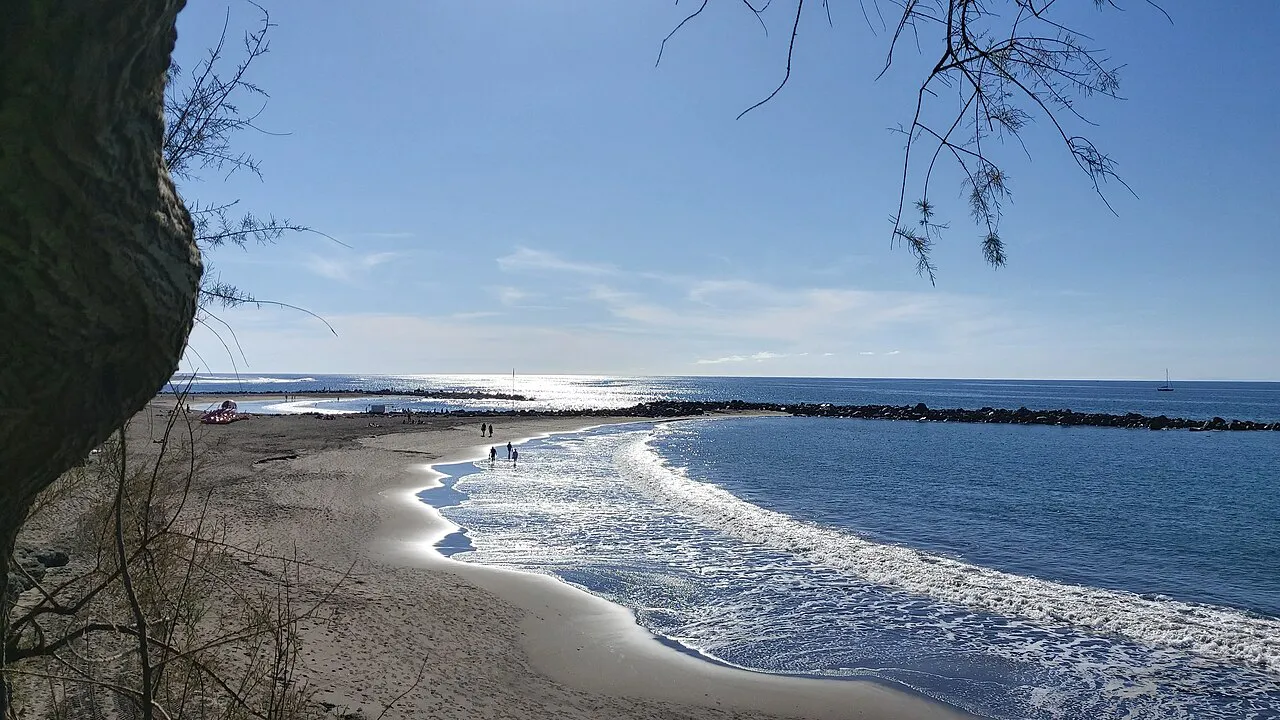
Arona, the third most populated municipality on Tenerife, has 15 km of beaches on the south coast. Its original centre and town hall sit up in the hills, but from the 1960s tourism transformed the small fishing village of Los Cristianos into a resort where fine beaches share the shore with 4- and 5-star hotels, and where leisure runs by day and by night.
Turismo de Tenerife's Arona page splits the municipality into four distinct areas: Playa de las Américas, Los Cristianos, Las Galletas-Costa del Silencio and rural Arona. Playa de las Américas takes in several beaches and a wide choice of water activities all year. Los Cristianos has kept its seaside charm, hosts most of the area's shopping and cultural life, and has a busy port. Las Galletas-Costa del Silencio is calmer, prized for its peaceful coastline, rich sea life and the protected Malpaís de Rasca.
Arona offers hotels, tourist apartments and rural lodgings in its inland areas, Tenerife South Airport is the closest airport, and several TITSA bus lines link it with Santa Cruz, other southern towns and the main tourist zones. A tourist train even loops through the streets of Los Cristianos and Playa de las Américas. Our pick: Los Cristianos for a real town with shops and a harbour, Playa de las Américas for water sports and late nights, and Las Galletas for a quieter seaside stay.
Los Gigantes and Puerto Santiago: Cliffs and a Quieter West Coast
The municipality of Santiago del Teide stretches from the coast at Puerto Santiago up to the pine forests of Mount Teide. Its landmark is the cliffs of Los Gigantes, which rise as high as 600 m above the sea, and boats leave the marina every day for whale and dolphin watching. Puerto Santiago has a marina and a popular black-sand beach holding a European blue flag for its clear water, and Playa de La Arena is the municipality's best-known beach.
This is the base where a car makes the biggest difference. Turismo de Tenerife's Santiago del Teide page calls driving the most convenient way to explore, and warns that roads in the mid-altitude areas have plenty of bends. TITSA routes include 325 to Puerto de la Cruz, 460 between Icod de los Vinos and Costa Adeje, and 462 from Guía de Isora, but services run more often along the coast than up to the hill villages.
Inland, Santiago del Teide village sits at around 900 metres, cooler and quieter than the coast, with rural houses, small holiday apartments, family-run lodgings and restored Canarian homes with wooden balconies and inner courtyards. Our verdict: Los Gigantes and Puerto Santiago suit couples and drivers who want a calmer west coast with dramatic scenery; the village suits hikers heading for the Chinyero volcano or the January and February almond blossom.
Puerto de la Cruz: Historic Resort Town in the Green North
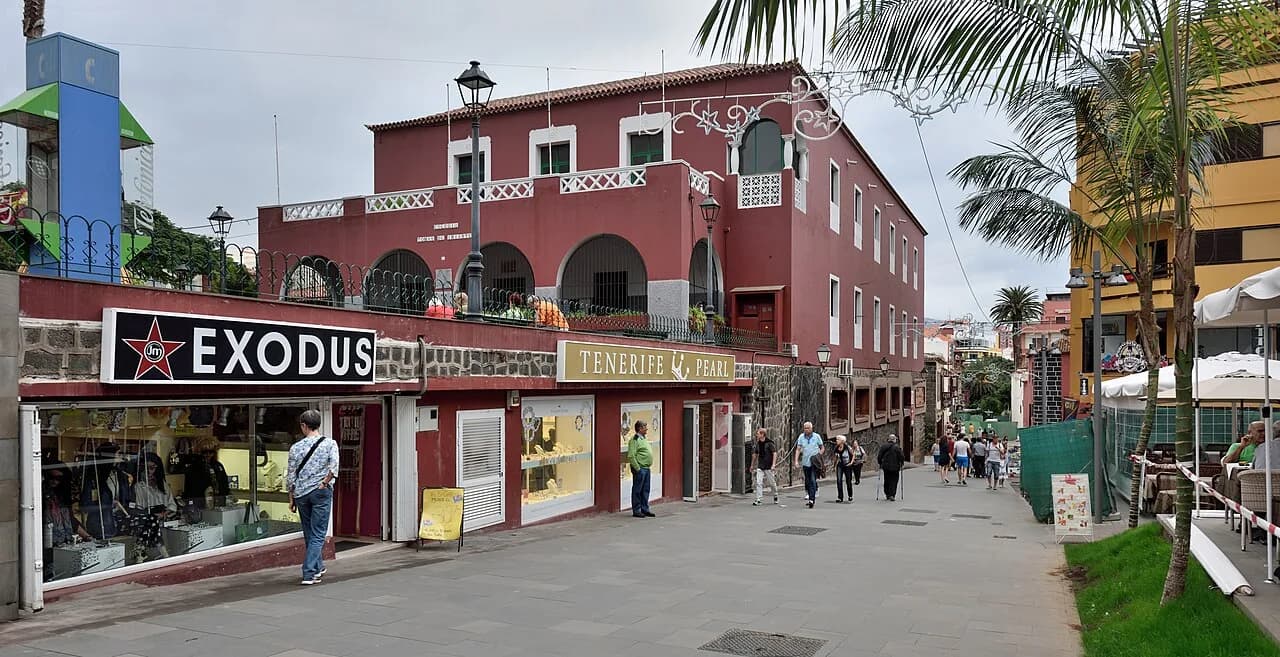
Puerto de la Cruz is where Tenerife tourism began: after the British Medical Society recommended it as an ideal retreat in the 19th century, it became the first tourist destination in the Canary Islands. It is the island's smallest municipality, set on the coastal edge of the Orotava Valley with Mount Teide behind it, and it still feels like a fishing town, with small boats landing their catch at the old dock and Plaza del Charco as the place to sit peacefully.
According to Turismo de Tenerife's Puerto de la Cruz page, the town has accommodation for more than 20,000 visitors, a historic quarter with over 140 protected buildings, and more restaurants and shops than anywhere else on the island. Swimming means black volcanic-sand beaches, the San Telmo natural pools and the lagoons of Lago Martiánez, and the fishing district of La Ranilla hosts the open-air Puerto Street Art exhibition.
It is also a strong base for the outdoors, giving access to the island's trail network, paragliding on Teide's slopes and diving at the La Rapadura volcanic tube. Choose Puerto de la Cruz for history, food, walking and a lived-in town; for a five-star stay there, our guide to 5-star hotels in Puerto de la Cruz compares the options side by side.
Santa Cruz and La Laguna: The Metropolitan City Base
Santa Cruz de Tenerife has been the island's capital since 1833 and lies in the north-east. Its centre has pedestrianised shopping streets, the restaurants and bars of Calle de La Noria, the García Sanabria Park and an open-air collection of sculptures by Henry Moore, Joan Miró, Martín Chirino and others along the Rambla. Its Carnival has been declared a Festivity of International Tourist Interest.
Santa Cruz is mainly urban, but Las Teresitas, a golden-sand beach lined with palms and protected by a breakwater beside the fishing district of San Andrés, is one of the island's best known, and the César Manrique Maritime Park offers lagoon-style pools in town. As Turismo de Tenerife's Santa Cruz page notes, TITSA buses connect the capital with every municipality, a tram runs to La Laguna, and ferries sail from the port to the eastern Canary Islands.
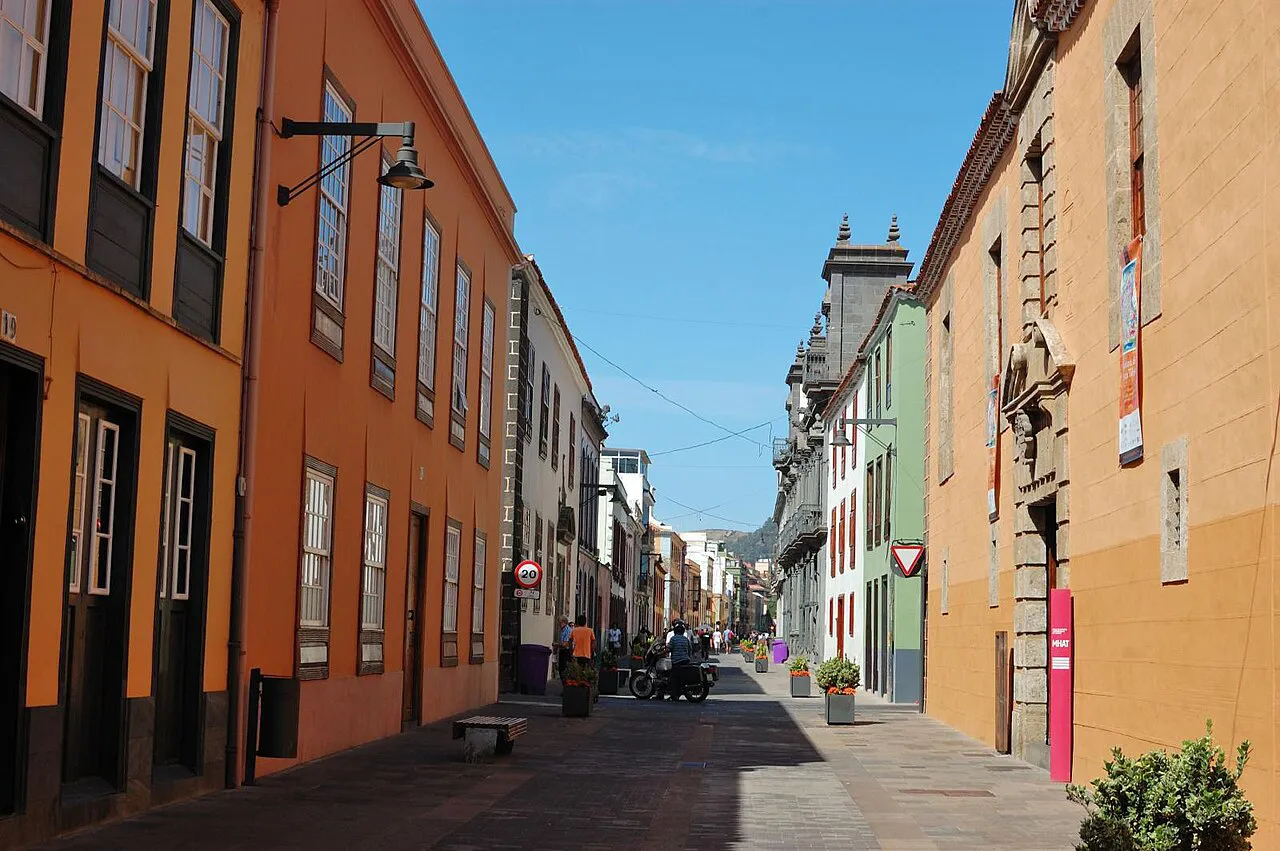
Together, Santa Cruz and San Cristóbal de La Laguna form the metropolitan area, and the board recommends both for a first visit, Santa Cruz for urban and commercial life and La Laguna for its historic heritage. This is the base for city-breakers, culture lovers and anyone travelling without a car. For smaller, characterful places to sleep around the island, see our guide to boutique hotels in Tenerife.
Two Representative Hotels: Royal Hideaway Corales Beach and Hotel Botánico
In the south, Royal Hideaway Corales Beach is an adults-only 5-star GL hotel on the beachfront of La Enramada, next to the village of La Caleta in Costa Adeje. Tenerife-born architect Leonardo Omar designed it with a ship-like exterior and coral-inspired interiors. The Royal Hideaway Corales Beach page lists 121 Junior Suites with sea views, in categories such as Junior Suite Sea Front View and Junior Suite with Outdoor Hot Tub, plus single-use suites.
The hotel pairs Michelin-starred cuisine with more than 10,000 square metres of gardens, a sports and wellness programme and three heated outdoor saltwater pools, and it sits close to the Costa Adeje Golf course. Parking is free on the public road nearby, with paid indoor parking; all common areas are adapted for guests with reduced mobility, while adapted rooms are booked directly with the hotel on request, subject to availability.
In the north, Hotel Botánico sits in the heart of Puerto de la Cruz within 25,000 m² of tropical gardens and belongs to The Leading Hotels of the World and the Loro Parque Group. As Hotel Botánico's own site describes, its 212 rooms and suites have terraces looking towards the Orotava Valley, Mount Teide or the Atlantic, with categories from Deluxe and Deluxe Family up to the Presidential Penthouse Suite, and art displayed throughout its gardens and lounges. Wellness is part of its pitch, so compare it with other spa hotels in Tenerife before you book.
Best Base by Trip Type: Families, Nightlife, Couples and First Visits
Families: the tourism board recommends Adeje, Arona, Puerto de la Cruz and La Orotava. In the south, Adeje and Arona offer accessible beaches, pedestrian areas and family leisure; in the north, Puerto de la Cruz and La Orotava are calmer, with gardens, promenades and cultural spaces. We would choose Costa Adeje or Los Cristianos for beach-first holidays with children; our guide to the best area to stay in Tenerife for families compares the options.
Nightlife: the liveliest after-dark scene is in the coastal tourist zones of Arona and Adeje, with bars, terraces, live music and clubs open late for an international crowd. Santa Cruz is busy at weekends with a more local, dining-led scene, and Puerto de la Cruz is relaxed, built around bars, terraces and an evening stroll. Our guide to the best area to stay in Tenerife for nightlife goes into more detail.
First visits and couples: the board's first-visit picks are Santa Cruz, La Laguna, Puerto de la Cruz and La Orotava. Our take: beach-first first-timers should start in Costa Adeje or Los Cristianos, and those who want the island's character in Puerto de la Cruz. Couples have three strong options: an adults-only hotel at the La Caleta end of Costa Adeje, the cliffs of Los Gigantes, or the gardens and old streets of Puerto de la Cruz.
Getting Around from Your Base: Bus, Tram, Taxi or Car
Tenerife's buses, known locally as guaguas, are run by TITSA and reach a large share of the island's towns, with inter-urban lines linking Santa Cruz, Puerto de la Cruz and Adeje. Santa Cruz is the best-connected base, with buses to every municipality and the tram to La Laguna. Taxis, tourist transport and organised excursions are available, particularly in the busier tourist areas.
A car opens up the island. The TF-1 in the south and the TF-5 in the north provide quick links between the metropolitan area, the resorts and the coastal towns, while secondary roads climb to inland and mid-altitude villages. Our rule of thumb: travelling car-free, stay in Santa Cruz, Puerto de la Cruz, Los Cristianos or Costa Adeje; planning a rural stay or a base in Los Gigantes, rent a car, as the board itself advises for Santiago del Teide.
Weather by Area Through the Year
The south is the safer bet for sun. Adeje averages around 24 °C and the board cites close to 300 sunny days a year, Arona typically ranges from 18 °C in winter to 28 °C in summer, and the coast around Los Gigantes and Playa de La Arena is mild and mostly sunny, although the higher villages of Santiago del Teide are cooler, especially in winter and at sunset.
The north and the capital trade some sunshine for greenery. Puerto de la Cruz ranges from 15 to 22 °C and, like La Orotava, has a more humid climate with a greater tendency to cloud at certain times of year. Santa Cruz averages 21.2 °C, with summers that can pass 30 °C and winters that rarely drop below 15 °C, but facing north-east it may see slightly more cloud and cooler winter weather than the south.
Choosing Your Tenerife Base
For most beach holidays, Costa Adeje and Los Cristianos are the easiest answers: a wide range of hotels, much of the island's beach infrastructure and the best odds of sunshine. Choose Puerto de la Cruz if you want history, gardens and a real town; Santa Cruz if you are travelling car-free or love city life; and Los Gigantes or Puerto Santiago if you have a car and want cliffs and quiet.
Journey times between areas are relatively short, so a longer trip can be split between the south for the beach and Puerto de la Cruz or Santa Cruz for culture. Whichever base you pick, check the exact room category and view when booking.
Explore more Tenerife guides
- 5-Star Hotels in Puerto de la Cruz, Tenerife
- Best Area to Stay in Tenerife for Families
- Best Area to Stay in Tenerife for Nightlife
- Boutique Hotels in Tenerife
- Cheap Hotels in Santa Cruz de Tenerife
- Cheap Hotels in Tenerife
- Spa Hotels in Tenerife
- Where to Stay in Santa Cruz de Tenerife
- Where to Stay in Tenerife for First Timers
- Where to Stay in Tenerife for Hiking
- Where to Stay in Tenerife in Winter
- Where to Stay in Tenerife Without a Car
Frequently Asked Questions
Is it better to stay in the north or south of Tenerife?
Stay in the south (Adeje or Arona) for beaches, resort facilities and more sunshine. Choose the north, such as Puerto de la Cruz, for historic streets, greenery and a quieter atmosphere, with a greater chance of cloud.
Which area of Tenerife is best for a first visit?
The tourism board suggests Santa Cruz, La Laguna, Puerto de la Cruz and La Orotava for a first visit. If beach time comes first, start in Costa Adeje or Los Cristianos.
Where is the nightlife in Tenerife?
The busiest nightlife is in the coastal tourist zones of Arona and Adeje. Santa Cruz is lively at weekends with a more local scene, while Puerto de la Cruz is more relaxed.
Which towns in Tenerife suit families?
Adeje, Arona, Puerto de la Cruz and La Orotava are the board's family picks. The south offers accessible beaches and family leisure, while the north is calmer, with gardens and promenades.
Can you stay in Tenerife without a car?
Yes. TITSA buses link major towns, and Santa Cruz has buses to every municipality plus a tram to La Laguna, so Santa Cruz, Puerto de la Cruz, Los Cristianos and Costa Adeje all work car-free.
Is Los Gigantes a good base?
Yes, for couples and walkers who want cliffs, whale-watching boats and the black-sand Playa de La Arena. A car is the most convenient way to explore, as buses are less frequent away from the coast.
Sources
- Cities and towns in Tenerife — Turismo de Tenerife (webtenerife)
- Adeje and Costa Adeje — Turismo de Tenerife (webtenerife)
- Arona — Turismo de Tenerife (webtenerife)
- Puerto de la Cruz — Turismo de Tenerife (webtenerife)
- Santa Cruz de Tenerife — Turismo de Tenerife (webtenerife)
- Santiago del Teide (Los Gigantes) — Turismo de Tenerife (webtenerife)
- Royal Hideaway Corales Beach – Adults Only (Barceló Hotel Group official page)
- Hotel Botánico & The Oriental Spa Garden (official website)
You might also like


Continue reading
More guides you'll find useful




.jpg)