

Where to Stay in Tenerife for First Timers: Easy Bases Compared
First trip to Tenerife? Compare Costa Adeje, Los Cristianos and Puerto de la Cruz as first-time bases, with transport tips and two hotels that suit each style.
AI-assisted guide · Sources and editorial policy
On this page
Most first-time visitors to Tenerife do best with a base on the sunny south coast and a day or two set aside for the greener, more historic north. That is also the island tourist board's own suggestion. Below we compare the main bases, plus two hotels that show each style of stay.
The Quick Answer: South for Sun, North for Character
In its visitor FAQ, Turismo de Tenerife describes the south as home to the island's main tourist areas, Costa Adeje, Los Cristianos and Playa de las Américas, with fine sandy beaches, hotels of every kind, leisure parks and plenty of dining and nightlife. For a first trip, its recommended approach is to stay in the south for sun and beach and spend one or two days exploring the north, its natural spaces and the interior.
The north has a more local, cultural feel. La Laguna, a UNESCO World Heritage city, and Puerto de la Cruz offer history, traditional architecture, markets and a quieter pace, though the north tends to be more humid, with more low cloud, while the south gets more hours of sunshine. Our advice: pick the south if beach time is the point; look north if you would rather stroll a real town each evening. Our overview of where to stay in Tenerife covers every coast.
Costa Adeje: The Easiest Resort Base
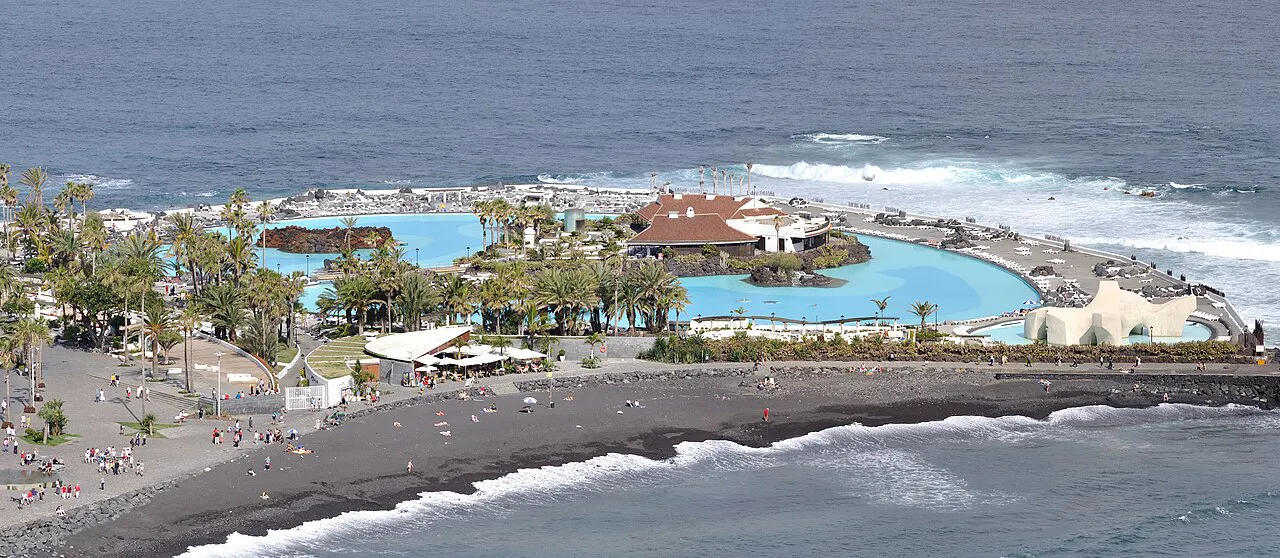
Costa Adeje is the coastal tourist area of Adeje in the island's southwest, stretching from Playa de Troya to Callao Salvaje. The tourist board's Adeje page highlights its high-level hotel infrastructure, a golf course, Siam Water Park, the Magma Congress Palace and a marina where boats leave to watch whales and dolphins. The municipality counts 14 beaches of different coloured sand and, by the board's figures, roughly 300 days of sunshine a year.
For a first visit, little needs organising. Buses link Costa Adeje with Adeje town, other southern resorts and the rest of the island, taxis wait in the tourist areas, and direct buses run from Tenerife South Airport. Families weighing it against Los Cristianos can compare both in our guide to the best area to stay in Tenerife for families.
Los Cristianos and Playa de las Américas
In the municipality of Arona, the official Arona guide splits the coast into Playa de las Américas, Playa de los Cristianos and Las Galletas-Costa del Silencio, with rural Arona inland. Los Cristianos grew from a small fishing village, keeps its seaside charm and hosts most of the area's shopping and cultural life around a busy port. Playa de las Américas has several beaches and water activities all year, and a tourist train runs through the streets of both.
Tenerife South Airport is the closest airport to Arona, and several TITSA bus lines connect the area with Santa Cruz and other southern resorts. Choose Los Cristianos for a real town around a busy port, or Playa de las Américas if evenings matter: Arona and Adeje hold the island's greatest concentration of nightlife, as our guide to the best area to stay in Tenerife for nightlife explains. Las Galletas-Costa del Silencio suits those who want a peaceful coastline instead.
Puerto de la Cruz: A Walkable Northern Town
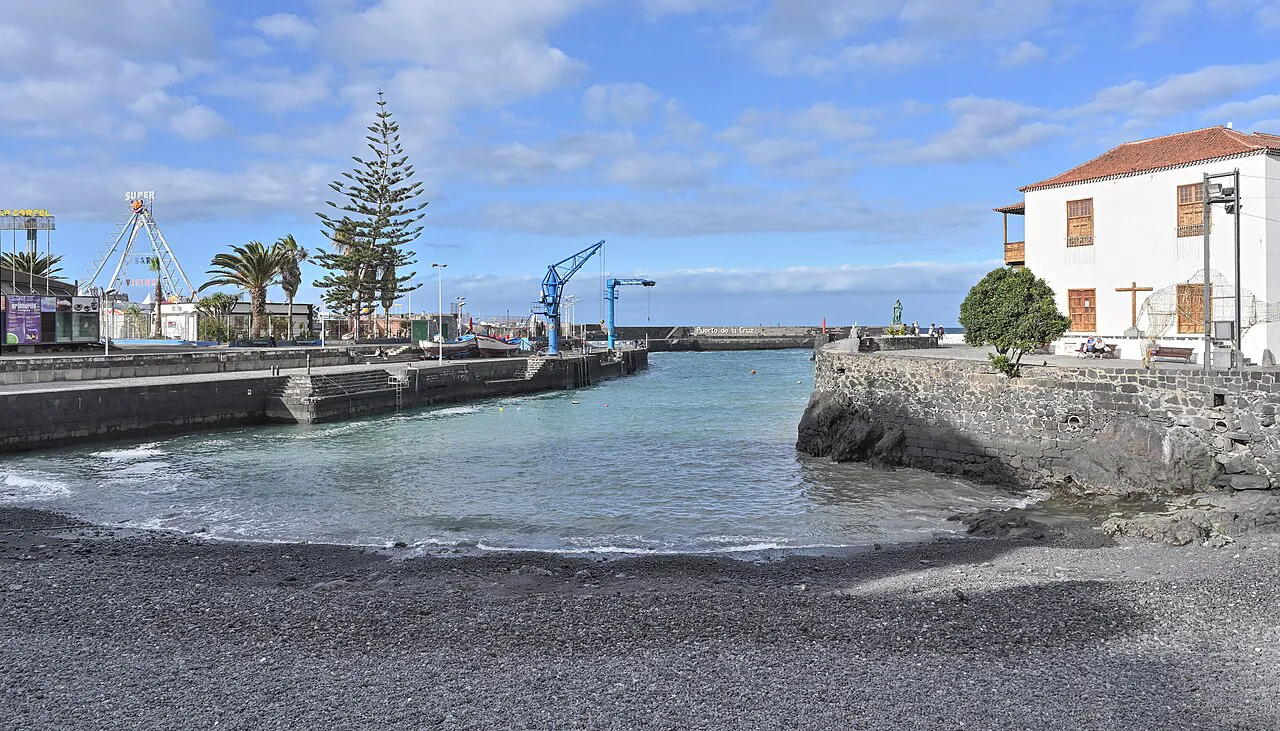
Puerto de la Cruz was the first tourist destination in the Canary Islands, and the tourist board's Puerto de la Cruz page shows why it still works for newcomers: a protected historic quarter with more than 140 protected buildings, a fishing dock, Plaza del Charco, a long coast made for leisurely walks, black volcanic-sand beaches, the San Telmo natural pools and the lagoons of Lago Martiánez. The town also has the most restaurants and shops on the island.
It spans the coastal part of the Orotava Valley with Mount Teide behind it, and it is a good base for hiking and diving. Pick it if you prefer evenings in squares and sea-view terraces to a resort strip. For a more upmarket stay, see our shortlist of 5-star hotels in Puerto de la Cruz, Tenerife.
Santa Cruz and La Laguna as Day Trips or a City Stay
The tourist board's guide to Tenerife's towns names Santa Cruz de Tenerife, San Cristóbal de La Laguna, Puerto de la Cruz and La Orotava as the places usually recommended for a first visit: Santa Cruz for urban and commercial life, La Laguna for its historic heritage and La Orotava for traditional architecture and natural surroundings. Santa Cruz also has a lively nightlife at weekends, geared more to urban leisure and places locals use.
Most first-timers treat these as day trips, but a city stay makes sense if you fly into Tenerife North Airport, which sits near La Laguna and Santa Cruz and mainly handles inter-island and Spanish mainland flights. For characterful smaller hotels, including options in La Laguna, browse our guide to boutique hotels in Tenerife.
Two First-Timer Hotels: Arona Gran and Hotel Monopol
For the south-seafront style, Arona Gran Hotel describes itself as an adults-only (16+) hotel on the seafront in Los Cristianos, where the vast majority of rooms have sea views, some of them partial. Two main pools sit on its ground-level solarium, one heated all year, and the rooftop UP! area adds an infinity pool, a glass pool and a jacuzzi reserved for UP! rooms and UP! Suites. Stays are bed and breakfast or half board, and there is no hotel parking, so it suits couples arriving by taxi or bus.
For the north-old-town style, Hotel Monopol's own site places it in an open pedestrian area near the three loveliest town squares of Puerto de la Cruz, a few minutes' walk from the old town and the sea. Canarian wooden balconies front the building, and inside a patio with palms and tropical creepers rises to a glass roof. The same family has run it for over 92 years, and WiFi is free throughout.
Getting Around on Your First Trip
According to the official getting-around advice, a rental car is the most flexible option, especially if you want to combine north and south, but public transport is enough if you stay in well-connected areas. The bus network works particularly well in Santa Cruz, La Laguna, Puerto de la Cruz and the southern tourist areas, while rural and mountain services run less often. Taxis fill the gaps for airport runs, luggage and late journeys.
Match your arrival airport to your base: Tenerife South handles most charter and low-cost flights from Europe and sits close to Costa Adeje, Los Cristianos and Playa de las Américas, while Tenerife North suits stays in the north or the capital.
How Long to Stay and How to Split Your Nights
The tourist board recommends at least five to seven days to see the island at a relaxed pace. A week lets you combine the southern beaches with a trip to Teide National Park, a natural space such as the Anaga or Teno Rural Park, and a UNESCO-listed historic centre like La Laguna. On a three- or four-day break, it advises focusing on one area and leaving the rest for another trip.
That gives first-timers two good patterns. For a short break or a beach-first week, stay in one southern resort and add day trips north. For a longer stay with an interest in towns and hiking, split your nights between the south coast and Puerto de la Cruz.
Choosing Your First Tenerife Base
If you want the simplest first trip, book Costa Adeje or Los Cristianos and plan one or two northern day trips. If heritage, walking and evenings on a town square appeal more than a sun lounger, base yourself in Puerto de la Cruz. Whichever you choose, check the exact room type when booking, since views and pool access can vary within the same hotel.
Planning other first trips in Spain? Our guide on where to stay in Barcelona for first timers matches neighbourhoods to your trip in the same way.
Frequently Asked Questions
Is it better to stay in the north or south of Tenerife on a first visit?
Turismo de Tenerife usually recommends combining both: stay in the south for sun and beaches, then spend one or two days exploring the north and the island's interior.
How many days do you need in Tenerife?
The tourist board suggests a minimum of five to seven days. On a three- or four-day trip, focus on one area and save the rest for a later visit.
Can first-time visitors manage without a car?
Yes, if you stay in a well-connected area. Buses work well in Santa Cruz, La Laguna, Puerto de la Cruz and the southern tourist areas, though rural services are less frequent.
Which Tenerife towns suit families on a first trip?
The tourist board usually recommends Adeje, Arona, Puerto de la Cruz and La Orotava for families, with beaches and leisure in the south and a quieter, greener setting in the north.
Is Puerto de la Cruz a good first base?
It is a strong choice if you prefer a walkable, historic town to a resort, with a protected historic quarter, coastal walks, natural pools and the most restaurants and shops on the island.
Sources
- Tenerife holidays — frequently asked questions (Turismo de Tenerife)
- Cities and towns in Tenerife — Turismo de Tenerife (webtenerife)
- Adeje and Costa Adeje — Turismo de Tenerife (webtenerife)
- Arona — Turismo de Tenerife (webtenerife)
- Puerto de la Cruz — Turismo de Tenerife (webtenerife)
- Getting around Tenerife — Turismo de Tenerife (webtenerife)
- Arona Gran Hotel — Spring Hotels (official site)
- Hotel Monopol Tenerife (official site)
You might also like


Continue reading
More guides you'll find useful


.jpg)

