
Where to Stay in Provence: Cities, Villages and Coastal Bases
Choose where to stay in Provence by comparing Aix, Avignon, Arles, the Luberon, Alpilles and Saint-Tropez, with useful station and market-day distinctions.
AI-assisted guide · Sources and editorial policy
On this page
Choose where to stay in Provence by deciding what belongs outside your accommodation each morning. A city-led visit, a village-led visit and a coastal break ask different things of the address. We would begin with Aix-en-Provence, Avignon, Arles, the Luberon, the Alpilles or Saint-Tropez as separate possibilities, then narrow the choice around your main interest and actual transport plans.
List the outings you would miss most and the mornings you want to leave unplanned. Then distinguish a place you want to visit once from a place you want to return to each night. Our recommendations are editorial judgments about how to organize those days; choose the base that gives your own interests a regular place in the stay.
Start with the part of Provence you want to return to
Give the stay a clear centre of attention before comparing accommodation. If you want several days of one town, select that town first and examine its hotel addresses. If the purpose is a sequence of villages, put the intended villages and travel days beside one another. If time by the coast is central, give that part of the trip its own accommodation decision.
For a mixed trip, identify the point at which the purpose changes. After several heritage visits, you might want days organized around the water, or prefer village mornings after a city stay. We would consider a second base for that change. Assign each stop a purpose before deciding how many accommodation bookings to make.
Aix-en-Provence: Old Town or Mazarin
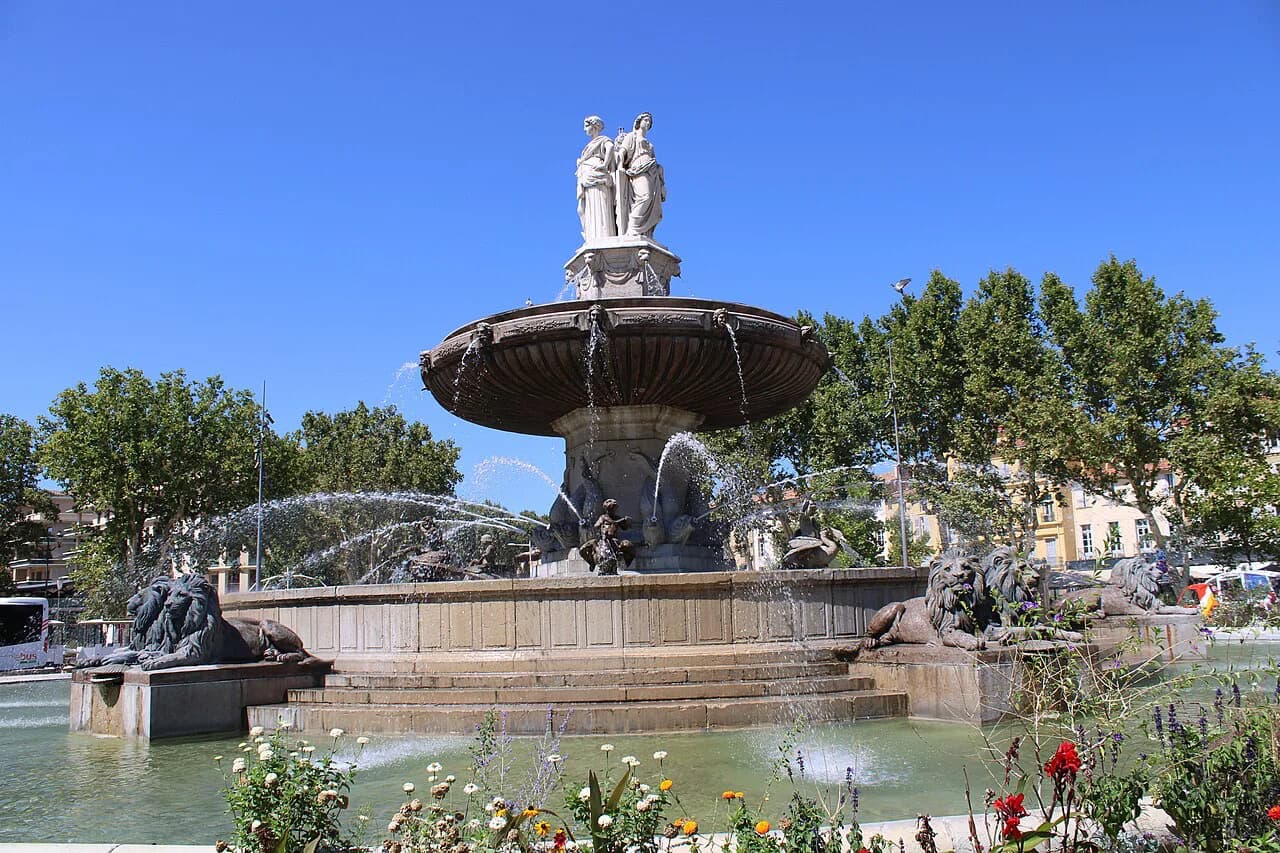
The Cours Mirabeau separates two useful search areas: the Mazarin district to the south and the commercial Old Town to the north. Aix’s tourist office describes the avenue’s plane trees, fountains and cafés. Use that north–south relationship to read accommodation addresses rather than treating every central hotel as being in the same quarter.
For an Aix-focused visit, choose the places where you would like to begin or finish the day and plot them relative to that avenue. Compare one address on each side before narrowing the hotel list. This gives the search a geographic reference while leaving the particular bedroom and its outlook as separate choices within the property.
Our hotel guide uses Cours Mirabeau as one reference point for a closer accommodation search. If the city is already your chosen base and the next decision concerns the property, compare Luxury Hotels in Aix-en-Provence through the more focused guide. Keep that hotel decision attached to the city days you actually want.
Aix arrivals: city railway, TGV station or coach stop
Aix’s official access page distinguishes Aix-en-Provence TGV from the city-centre railway station. It describes a shuttle from the TGV station to the bus station, while the city railway is near that bus station. Some intercity coaches arrive at Parc relais Krypton instead, with Line A providing the link toward the centre. Read the arrival point on the ticket before selecting a station-oriented hotel.
We would give the final arrival leg more weight on a one-night stop than on a stay with several full days in town. If you are arriving late or leaving early, compare the complete arrival-to-hotel and hotel-to-departure plans. For a longer stay, balance those two journeys against where you want to spend your ordinary days. A convenient first evening should not be the only reason for choosing every subsequent morning.
Avignon: historic-centre time and the correct railway station
Avignon has separate Centre and TGV stations. Its tourism office describes the TER Avignon TGV–Carpentras line as the connection to Gare Centre and places the bus station beside Gare Centre. The historic-centre itinerary is a different consideration from accommodation beside the TGV arrival. Keep the full station name attached to each hotel search.
We would compare Avignon when the plan combines time in its historic centre with onward journeys using the named arrival points. Work backward from your departure as well as forward from arrival. A hotel chosen around one rail connection should also fit the hours you want to spend in the city. For a stop between two journeys, the accommodation’s baggage arrangements may matter as much as the room.
For a city-focused stay, map the places you want to revisit during the day. For a night between journeys, start with the arrival, departure and luggage arrangements. If both approaches produce workable offers, choose the address that leaves room for the city visit you most want to make. The priority comes from the purpose of the stop.
Driving into Avignon: car entrance and pedestrian exit
Avignon’s official parking guide lists options in the historic centre and on the outskirts. For the Palais des Papes car park, it gives vehicle access at 2 Rue Ferruce and pedestrian exits through Place du Palais des Papes or Rue de la Juiverie. A destination shown on a sightseeing map therefore need not be the car entrance you should navigate to.
We would compare a driving stay using three addresses: the accommodation entrance, the vehicle entrance to the intended parking facility and the place where you will emerge on foot. Resolve where luggage changes hands between them. Public parking can form part of the plan, but it remains separate from an accommodation offer promising its own parking. Keep any essential hotel arrangement attached to the property you choose.
Arles: stay for the heritage visits you want to complete
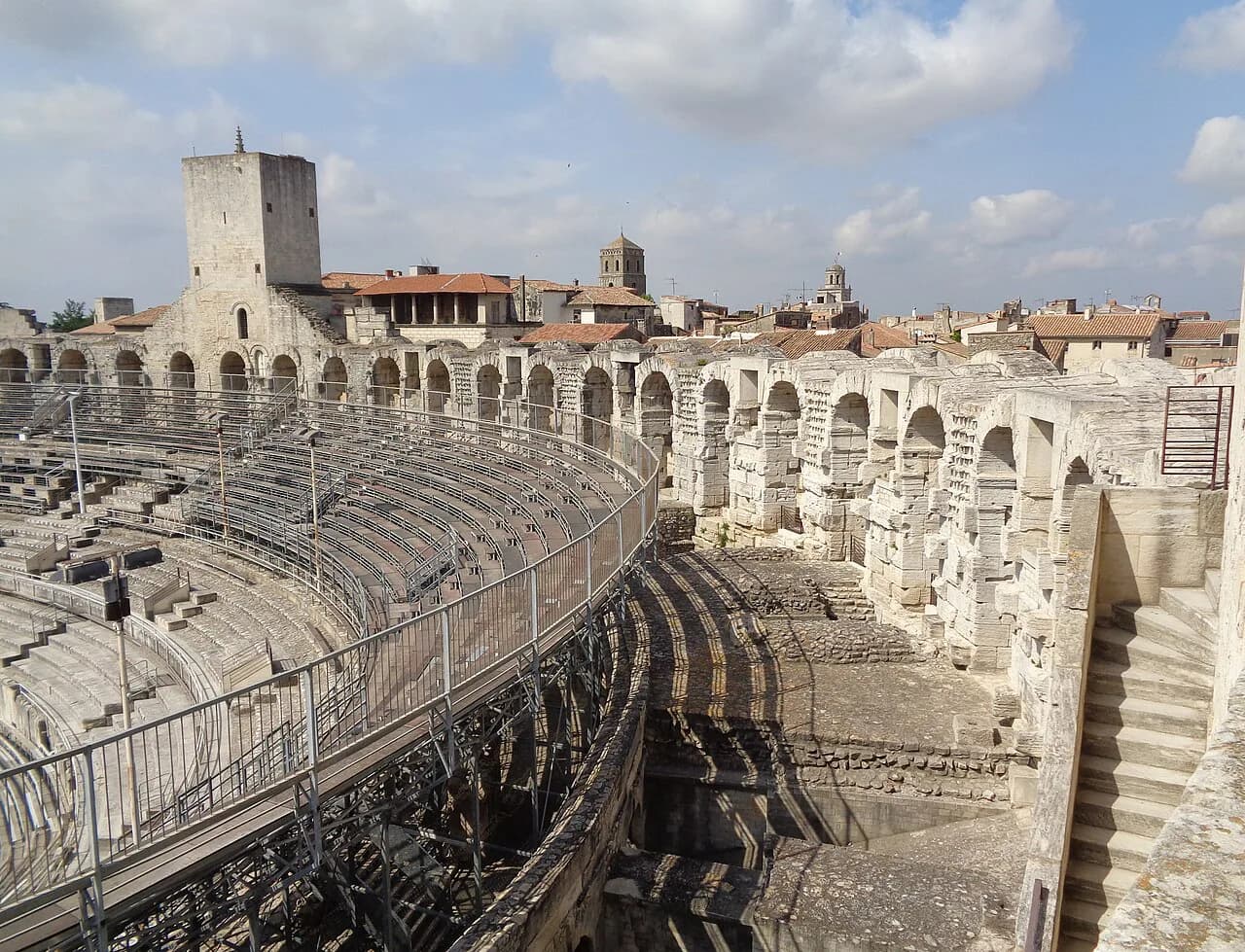
Arles’ official heritage page identifies its Roman and Romanesque monuments, including the Roman amphitheatre, ancient theatre, Saint-Trophime church and cloister, and the Baths of Constantine. These named places give an Arles stay a clear starting point. We would compare it for a trip whose days are built around that heritage rather than choose it as an interchangeable village base.
Decide whether you want a concentrated visit to a few monuments or time to separate them across different days. For the latter, accommodation in Arles lets you organize the overnight decision around Arles itself. Pick the visits you most want to make and examine their opening arrangements before setting the stay length; an impressive list is less useful than a sequence you actually want to follow.
For companions with different interests, choose two shared visits before adding optional ones. Decide which day belongs to each visit and leave space for the people who prefer to finish earlier. A stay organized around a smaller agreed itinerary can be more satisfying than accommodation chosen chiefly to work through a longer monument list.
Gordes: choose the hill-village stay deliberately
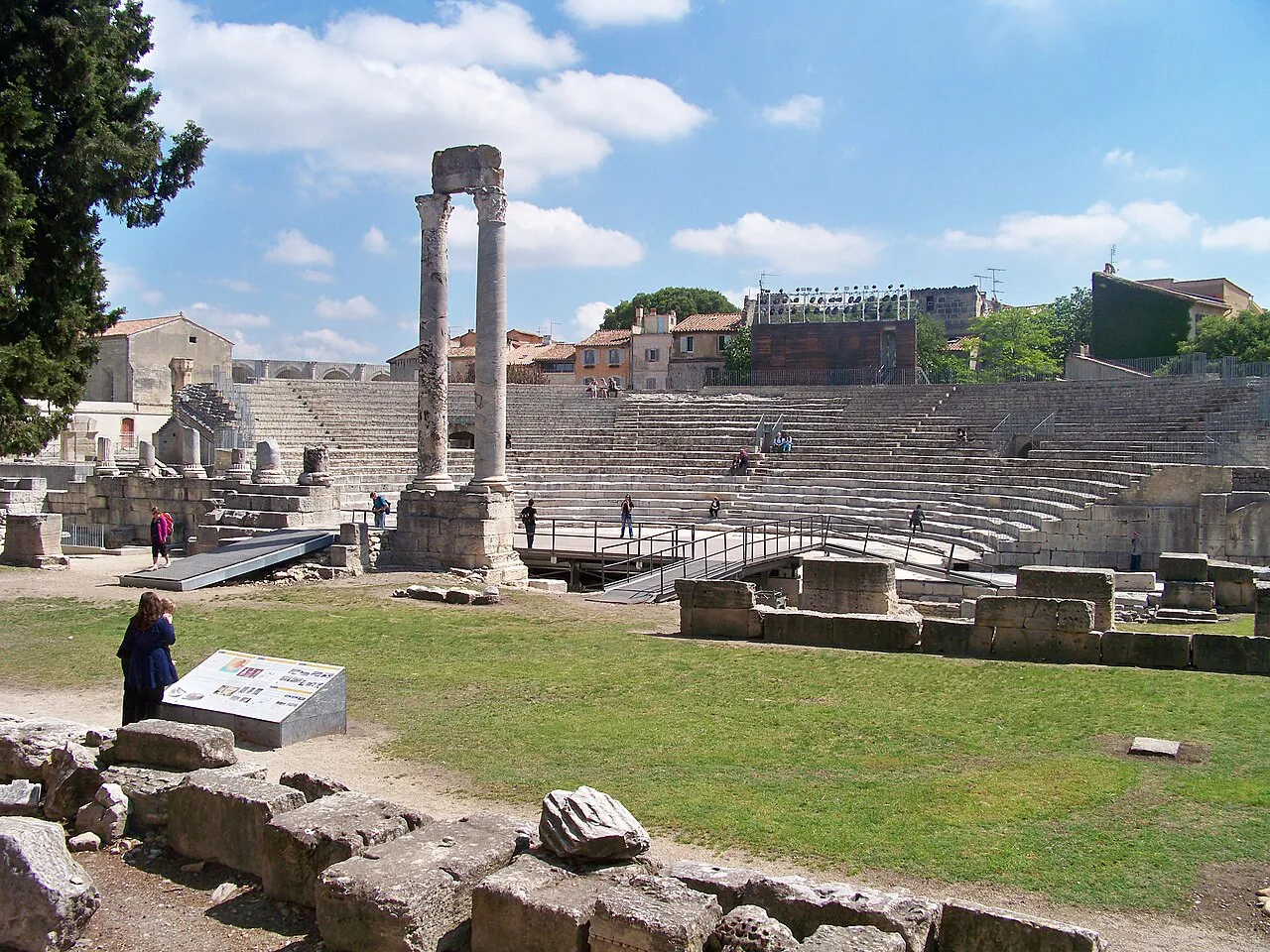
Destination Luberon describes Gordes on a rocky promontory above the Calavon valley, with its historic centre around the castle and stone-paved lanes. It lists paid parking around the centre and describes the old centre as primarily explored on foot, with traffic regulated in season. Those are specific Gordes conditions, not parking rules for every Provence village.
We would compare a Gordes stay when the village itself is a place you want to revisit at different points in the day. Separate the pleasure of a visit from the requirements of arriving with bags and returning to your accommodation. For a car-based stay, the hotel’s own approach and luggage arrangement deserve a place in the offer comparison. For a walking-led stay, trace the route from the actual entrance.
Apt and the Luberon: plan around the routes you will use
The Pays d’Apt Luberon tourism office publishes bus documents for Apt–Gordes–Maubec, Apt–Cadenet–Aix-en-Provence and Apt–Bonnieux–Maubec, among other routes. That provides a starting point for a bus-led itinerary. Choose accommodation only after matching the relevant stops, operating days and return services to your intended outings; the route list alone does not settle those details.
We would use an Apt-led search when the planned journeys repeatedly refer back to Apt. Compare that with staying in the village you most want to experience, then draw the actual sequence of outward and return journeys. One destination per outing may suit your plan better than a day that depends on several connections.
Let the route plan shape a holiday without a car early. The office’s bus page warns that schedules and some routes change, so consult the dated route documents for the stay you are planning. For a car-based holiday, organize the same outings around the actual vehicle and parking arrangements.
Let market mornings help choose the Luberon base
The official Luberon market calendar lists Gordes on Tuesday morning, Roussillon on Thursday, and Bonnieux and Lourmarin on Friday. Apt has a Tuesday Marché Paysan, described as a farmers’ market, and a separate Saturday-morning market listing. The calendar also marks some other markets as seasonal. Use the named day and type of market to shape a stay, rather than expect the same market every morning.
We would let a market lead the overnight decision when browsing and shopping are central to the holiday. If it is simply one outing, organize that outing around the calendar and keep the base that serves the rest of the stay. Put the market morning beside arrival and departure: a visit that matters to you deserves enough room in the plan to enjoy it.
If you want to buy food for later, choose an accommodation format that fits that intention. Compare the actual offer for the storage or cooking arrangement you need. A market in the town does not establish a kitchen in a hotel room, and buying ingredients is a different accommodation requirement from browsing before lunch.
Alpilles: Maussane village time or a Saint-Rémy itinerary
The Alpilles tourist office places Maussane-les-Alpilles in the Vallée des Baux among olive groves, on the southern slopes of the Alpilles. It points visitors toward local producers and names the Fountain of the Four Seasons among the village sights. We would consider this base when those village and food interests form an important part of the stay.
For an archaeology-led plan, Glanum’s operator places the site on Avenue Vincent Van-Gogh in Saint-Rémy-de-Provence and names Avignon or Arles as rail approaches. It prohibits large backpacks and wheeled suitcases and provides no lockers. Arrange where your bags will stay before placing Glanum between a rail arrival and hotel check-in.
These are different reasons to organize a stay in the Alpilles. If the village routine is the attraction, choose accommodation around the place where you want to spend that time. If a particular visit leads the itinerary, map its approach and visiting conditions first. The monument’s address and the town’s accommodation addresses should remain distinct on your plan.
Saint-Tropez: give a coastal stay its own arrival plan
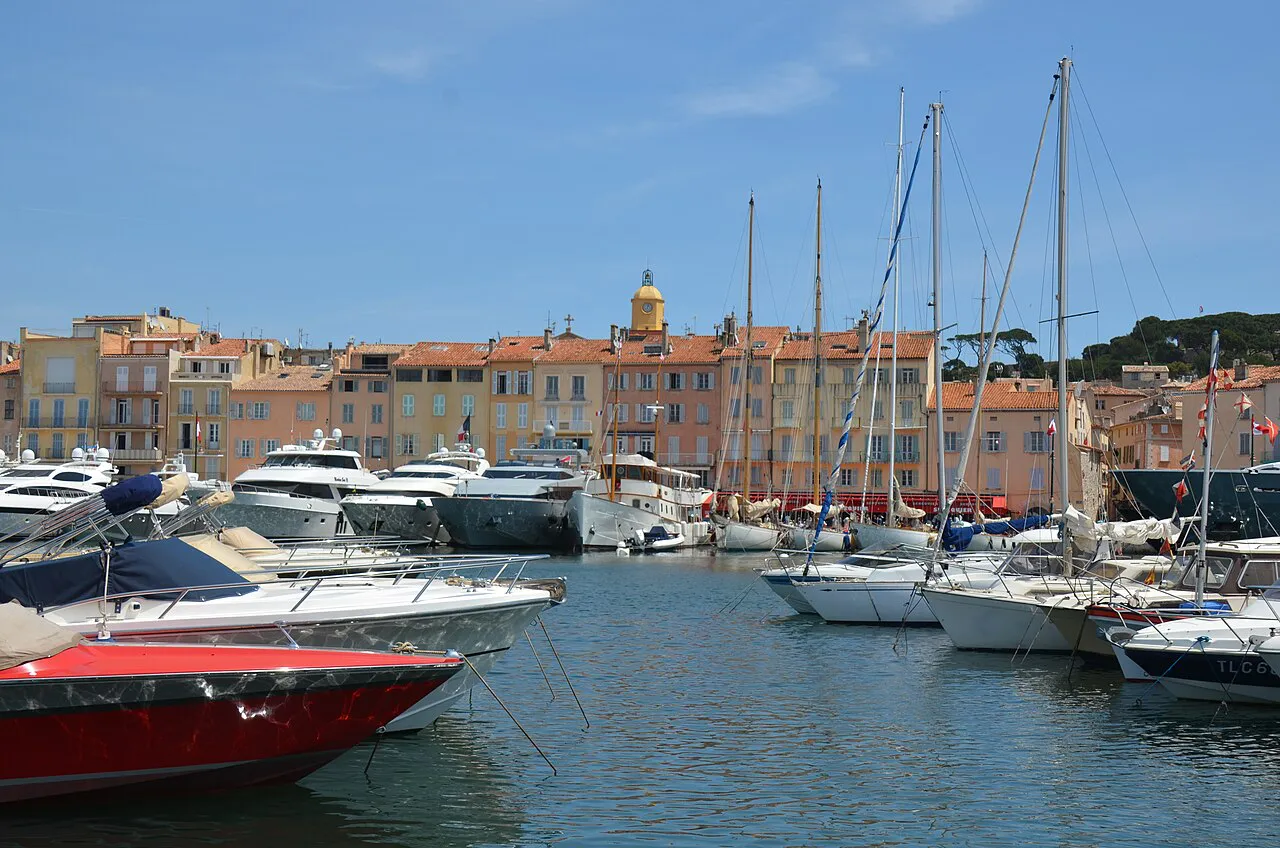
Saint-Tropez’s tourism office lists boat approaches from Sainte-Maxime, Port Grimaud, Les Issambres and Les Marines de Cogolin. It describes rail approaches through Toulon or Saint-Raphaël–Valescure followed by bus connections; Nice and Cannes boat links are identified as high-season services. Choose the actual onward route for your dates rather than search as though the rail journey ends at a Saint-Tropez station.
We would give this coastal part of the holiday its own base decision when time by the water becomes the purpose of the trip. Decide whether you want accommodation in Saint-Tropez itself or are considering another town around the Gulf, then attach the correct local arrival to that address. A boat departure town and the town where you sleep are separate decisions.
If the coast is one element of a wider holiday, assess it alongside the inland days you have planned. Prefer a change of base when it gives that part of the stay the focus you want. An overnight move earns its place when you intend to enjoy the destination itself, rather than simply use the second hotel as a starting point for more travel.
Choose one base or split the trip by purpose
Keep one base when most of your intended days return to the same town or use the same approach. Consider two when the holiday changes focus, such as moving from heritage visits to village mornings or a coastal stay. Compare the cost in holiday time of packing, moving and checking in with the benefit of waking where the next part of the trip belongs.
Give each overnight stop enough purpose to justify the move. A second base need not represent a second sightseeing list: it might be where you want a few less structured days. Decide what those days should contain before choosing the address. That makes a split stay a deliberate part of the holiday rather than a response to too many attractive options.
Choose the base for the Provence days you want
Begin with the purpose of the stay, then keep the exact town, accommodation entrance and arrival point together. Compare city days in Aix or Avignon, Arles heritage visits, Luberon village and market plans, Alpilles interests and a coastal stay as distinct choices. Use one base when the days share a focus, and change base when the next part of the holiday deserves its own place to begin.
Explore more Provence guides
- Aix-en-Provence Hotels
- Aix-en-Provence Hotels With a Pool
- Avignon Hotels Near the Train Station
- Avignon luxury hotels
- Best Towns to Stay in Provence
- Best Villages in Provence to Stay
- Boutique Hotels in Aix-en-Provence
- Hotels in Aix-en-Provence Old Town
- Hotels in Aix-en-Provence With Parking
- Hotels in Arles, France, With Parking
- Hotels in the Provence Countryside
- Luxury Hotels in Aix-en-Provence
- Where to stay in aix-en-provence
- Where to Stay in Arles
- Where to Stay in Provence With a Car
- Where to Stay in Avignon
- Stay in Aix-en-Provence or Avignon
- Spa Hotels in Provence
- Boutique Hotels in Arles
- Luxury Hotels in Arles
- Boutique Hotels in Avignon
- Cheap Hotels in Aix-en-Provence
Frequently Asked Questions
Should I choose Aix-en-Provence or Avignon as my base?
We would choose around the days you want in the town and the journeys you intend to make. In Aix, distinguish Old Town and Mazarin addresses around Cours Mirabeau. In Avignon, keep Centre and TGV stations separate when comparing a city-focused stay with a transfer-focused one.
Can I plan a Luberon stay without a car?
Start with the routes you need. The tourism office lists Apt–Gordes–Maubec and Apt–Cadenet–Aix, among other bus routes. Match the actual stops, operating days and return services to your outings before choosing accommodation. The published route documents are a planning starting point.
Are Avignon Centre and Avignon TGV the same station?
They are separate stations. The tourism office describes the TER Avignon TGV–Carpentras line as the connection to Gare Centre, with the bus station beside Gare Centre. Keep the full arrival-station name in your hotel and onward-journey plan.
Which market mornings could shape a Luberon stay?
The official calendar lists Gordes on Tuesday, Roussillon on Thursday, and Bonnieux and Lourmarin on Friday mornings. Apt has a Tuesday farmers’ market and a Saturday market listing. Choose the morning that matters to you, with the current calendar attached to the travel plan.
Can I visit Glanum with my suitcase before hotel check-in?
Glanum prohibits wheeled suitcases and large backpacks and has no lockers. Arrange where your luggage will stay before adding the visit between arrival and accommodation. A hotel’s own luggage arrangement needs to be part of the actual offer.
Does a train take me directly into Saint-Tropez?
The tourism office describes rail approaches through Toulon or Saint-Raphaël–Valescure followed by bus connections. Choose the onward leg as part of the arrival plan, or compare the listed boat departures where those suit your trip. Keep the hotel town separate from the transport departure point.
Sources
- Aix official Cours Mirabeau north/south neighborhood relationship
- Aix official city railway, TGV and distinct bus arrival points
- Avignon official Centre/TGV railway and adjacent bus station
- Avignon official historic-centre/outskirts parking and Palais car entrance
- Arles official Roman and Romanesque heritage sites
- Alpilles official Maussane village geography and local interests
- Glanum current address, rail approaches and luggage restrictions
- Saint-Tropez official sea departures and rail-plus-bus approaches
- Pays dApt official Luberon bus route documents
- Pays dApt official village market days and seasonal distinction
- Destination Luberon official Gordes hill centre and parking
You might also like


Continue reading
More guides you'll find useful


.jpg)
