
Where to Stay in Normandy: Best Towns and Bases Compared
Choose the right base in Normandy: Bayeux, Caen, Honfleur, Deauville or Rouen compared for D-Day beaches, harbour charm, seaside stays and train access.
AI-assisted guide · Sources and editorial policy
On this page
Normandy is too spread out to see well from one perfect base, so the smartest way to decide where to stay in Normandy is to match the town to the trip. For the D-Day landing beaches, Bayeux and Caen lead. For harbour charm and Impressionist history, Honfleur is the pick. For a classic beach-resort stay, choose Deauville, and for a city break that starts with the fastest listed train journey from Paris, Rouen wins.
Below, the five bases are compared on what Normandy Tourism's official town pages say about each one: its character, what is nearby and how you get there by train, coach or bike, with a representative hotel for three of them described on the hotel's own website.
Quick answer: which Normandy base suits which trip
Stay in Bayeux if the landing beaches are the main reason for your trip and you want a historic town centre to come back to each evening. Choose Caen if you would rather have a lively university city with museums, shops, restaurants and nightlife, plus the cross-Channel ferry at Ouistreham and an airport at neighbouring Carpiquet. Pick Honfleur for a harbour stay full of galleries, with the Pays d'Auge countryside on the doorstep.
Book Deauville for a seaside resort holiday built around the beach, the boardwalk, horse racing and smart hotels, and Rouen for a culture-heavy city break on the Seine with the quickest listed rail link from Paris. If you have five nights or more, our advice is to use two bases: one for the D-Day sites and one for the harbour-and-resort coast or Rouen.
Bayeux: the classic base for the D-Day landing beaches
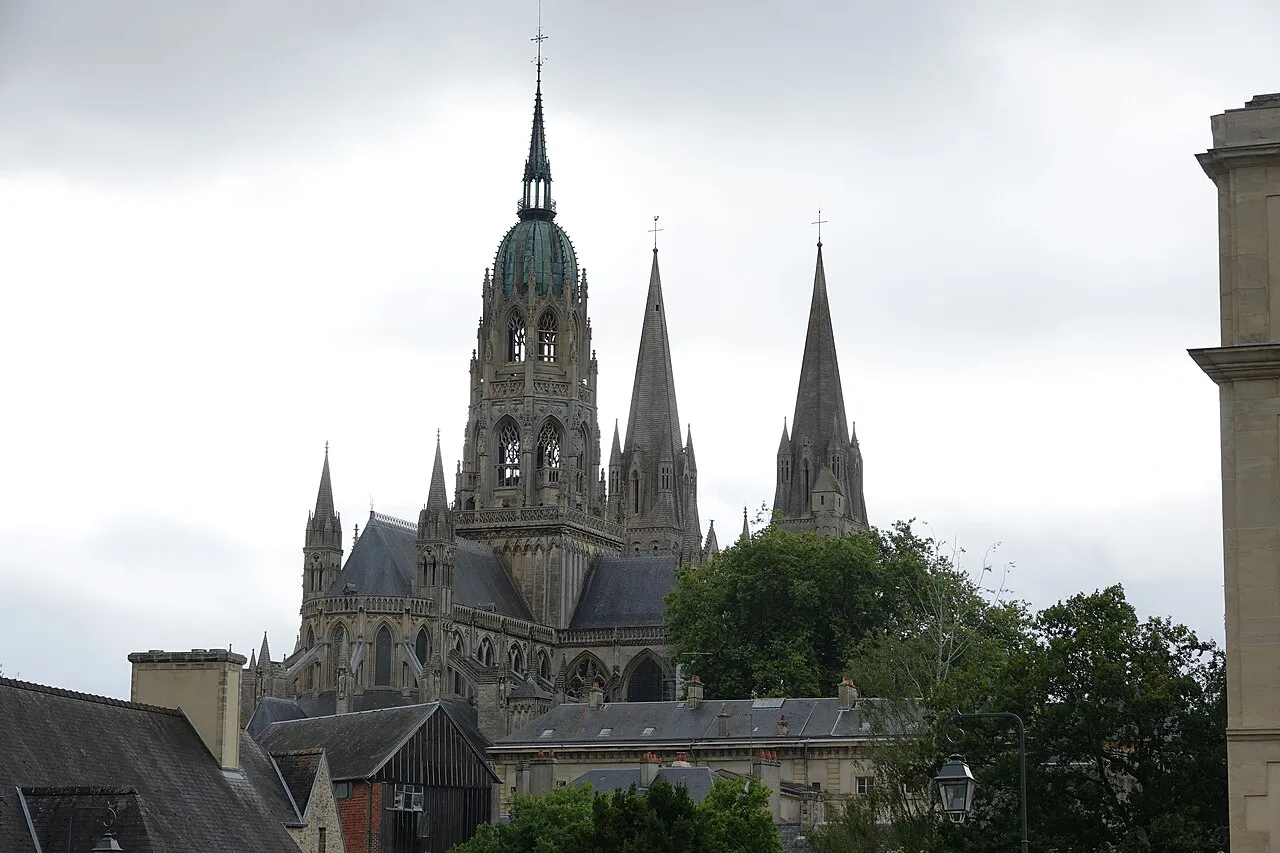
Bayeux is the town the regional tourist board calls the ideal base for exploring the D-Day landing beaches, which it places just a few kilometres away. Liberated swiftly in June 1944, Bayeux avoided most of the destruction other Normandy towns suffered, and its historic centre is the reward: a splendid cathedral consecrated in 1077 with William the Conqueror present, the former bishops' palace now home to the Baron Gérard Museum, and historic houses turned into restaurants and boutiques. The tourist board's guide also lists a lace conservatory, a botanical garden and markets on Wednesdays and Saturdays.
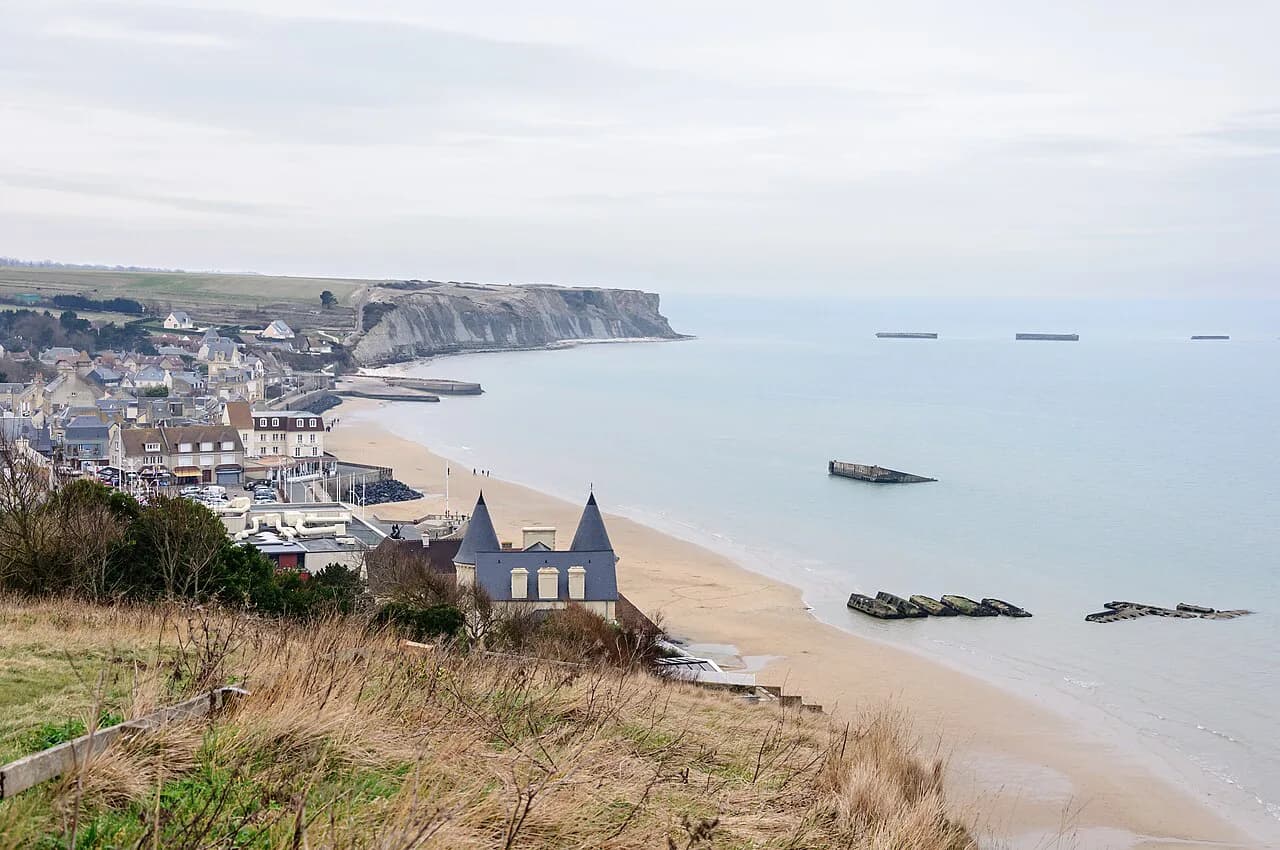
War history is right in town. The Memorial Museum of the Battle of Normandy, on the edge of the historic centre, covers the 100 days from D-Day to the full liberation of Normandy, and the nearby Bayeux War Cemetery is the largest British and Commonwealth cemetery in the region. In July and August the Nomad Car D-Day Line offers unlimited travel between sites including Omaha Beach, Gold Beach, Juno Beach, the Pointe du Hoc, the American cemetery at Colleville-sur-Mer and Arromanches with its artificial harbour.
One caveat matters for planning: do not book Bayeux expecting to see the Bayeux Tapestry there right now. Normandy Tourism's Bayeux guide says the current museum closed to the public from 1 September 2025 so that a new Bayeux Tapestry Museum could be built behind it, opening in 2027, and the embroidery is due to go on display at the British Museum in autumn 2026. Even without it, the cathedral, museums and beach access make Bayeux, in our view, the most complete D-Day base.
Caen: a lively city base with ferry, airport and rail links
Caen, William the Conqueror's hometown on the River Orne, is the better choice if you want a real city around you. William and his wife Matilda each commissioned a grand abbey, the Men's Abbey and the Women's Abbey, and the many-turreted castle between them now houses two museums. Much of Caen was destroyed before its liberation on 9 July 1944, but the centre was rebuilt in Caen stone and, according to Normandy Tourism's Caen page, offers plenty of museums, shops, restaurants and public gardens along with the nightlife of a university town.
Caen's real strength is connectivity. The tourist board describes the city as just 10 minutes from the beaches and 15 minutes from the cross-Channel port of Ouistreham, which has regular sailings to Portsmouth. Trains run directly to Bayeux, Lisieux, Cherbourg and Rouen, Twisto buses run between the city and Ouistreham, and Caen-Carpiquet airport has regular flights from the south of France, plus Ireland and the UK in summer.
Bayeux vs Caen: which is better for the landing beaches?
Both towns work for the landing beaches, so the choice comes down to atmosphere and logistics. Bayeux keeps the D-Day story on your doorstep, with its own war museum, the Commonwealth cemetery, Nomad Car coach lines to Grandcamp-Maisy and Courseulles, and the summer D-Day Line out to the main beach sites. Caen suits travellers arriving by ferry or plane and those who want a lively evening scene, and it is well placed for Pegasus Bridge, the Bénouville bridge over the Caen Canal that British airborne troops secured in the first successful action of 6 June 1944.
Our advice: first-time visitors focused on the beaches should stay in Bayeux, while couples or groups who want a city break with day trips should stay in Caen. If you would rather sleep within sight of the sand, our guide to hotels near Normandy beach, France covers stays right by the landing beaches. Travelling with children? Our guide to where to stay in Normandy with family compares bases and hotels that suit a family trip.
Honfleur: harbour-town charm and a gateway to the Pays d'Auge
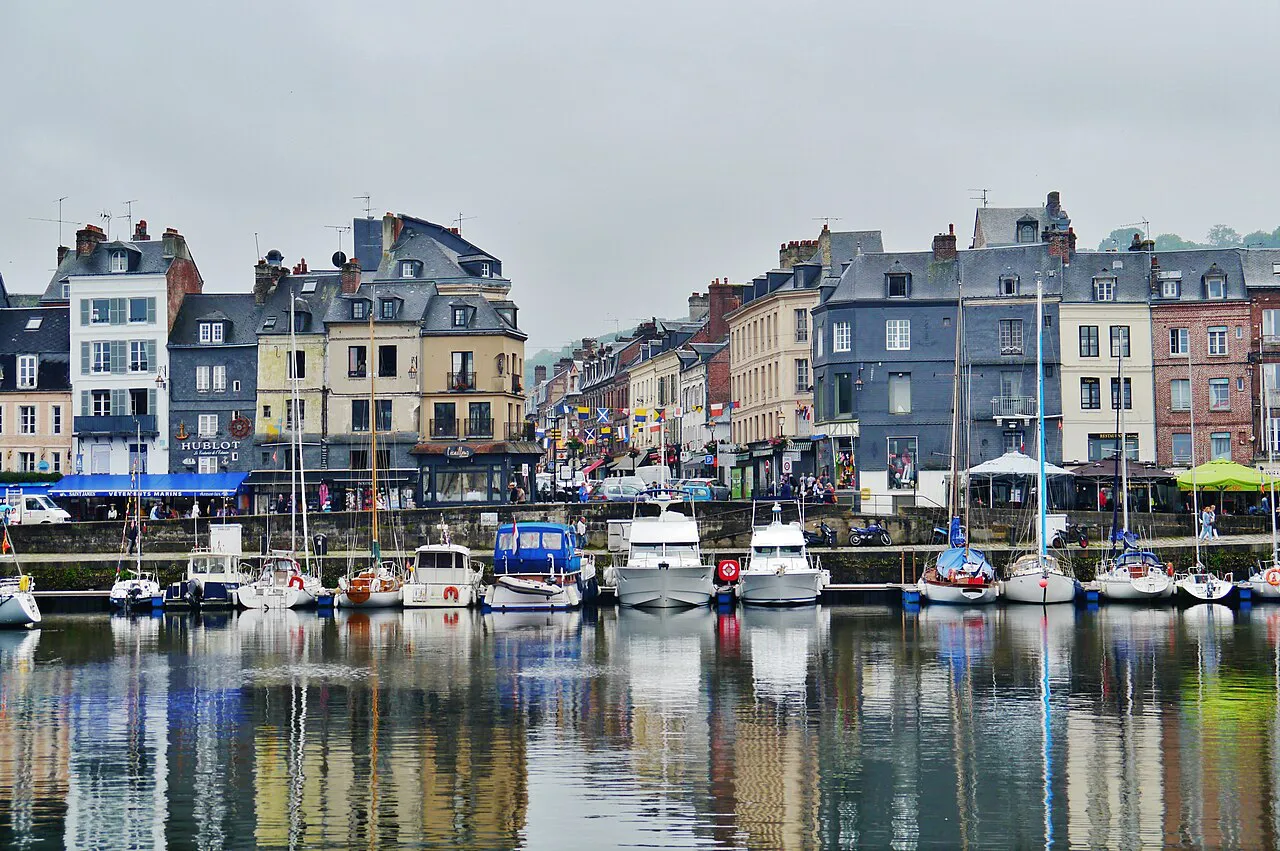
Honfleur is the base for atmosphere: a painters' town of medieval cobbled lanes, narrow houses clad in grey slate and timber-framed façades around an Old Harbour lined with restaurants. The tourist board names the Old Harbour (Vieux Bassin) and the Lieutenance as the town's iconic symbols, and highlights its small art galleries, boutique hotels and traditional restaurants. Courbet, Monet and Boudin were all inspired by the shifting light over the Seine Estuary, and dozens of galleries and studios carry that tradition on today.
It is also a working town, a fishing port, commercial harbour and marina at once, with markets, concerts in the historic Greniers à Sel salt storehouses and a beach. For a longer stay, Honfleur's big advantage is the Pays d'Auge countryside around it, where you can follow the Cider Route and Cheese Route or walk along the Seine Estuary. If Honfleur is your choice, our guide to where to stay in Honfleur compares the options in town, and our roundup of boutique hotels in Honfleur narrows down characterful stays.
Deauville: Normandy's purpose-built seaside resort
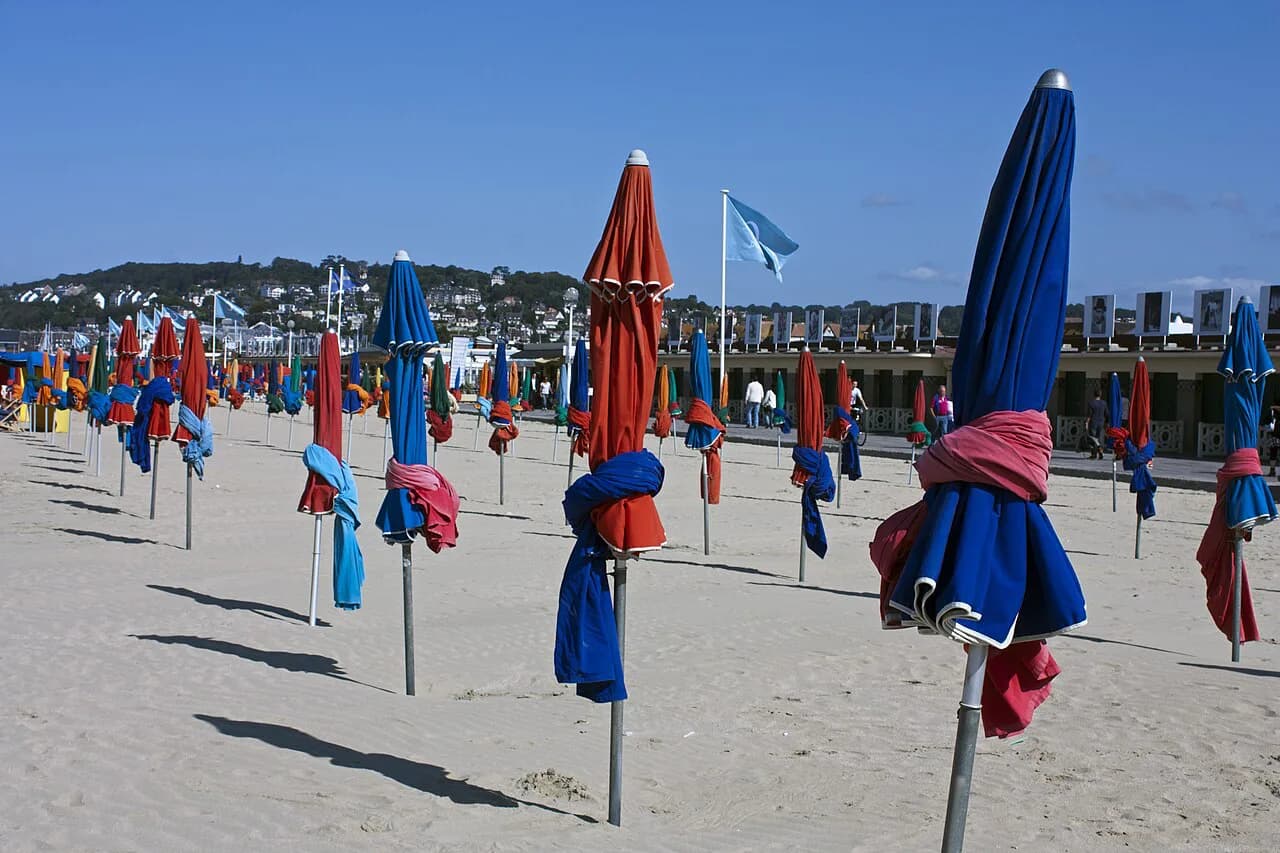
Deauville was conceived for visitors. The resort rose from drained marshes and sand dunes in the 1860s, the vision of Dr Joseph Olliffe and the Duke de Morny, helped by a brand-new railway line, and grand hotels in the Anglo-Norman timber-frame style soon followed. Belle Époque hotels and a casino came next, then, between the wars, a new station, Art Deco bathing facilities and the famous wooden boardwalk. Today Deauville offers high-end hotels, boutiques and restaurants, a sea therapy spa and two golf courses, plus a wide sandy beach dotted with colourful parasols and beach huts.
Stay here if horses, events or the beach are the point of your trip. Deauville has two racecourses, La Touques and Clairefontaine, along with polo, the Pôle International du Cheval Longines and the Deauville American Film Festival, which has drawn film fans every September since 1975. The new Franciscaines museum adds culture, and Normandy Tourism's Deauville page stresses that the town is enjoyable all year, even in winter, for boardwalk strolls and beach sunsets. For a closer look at the town's areas and hotels, read our guide on where to stay in Deauville.
Honfleur or Deauville: which is better for a coastal stay?
Nomad Car route 111 links Honfleur and Deauville along with Caen, Cabourg and Le Havre, so it is easy to visit one while staying in the other. Choose Honfleur if you want old streets, galleries and harbourside dinners and plan to explore the Pays d'Auge. Choose Deauville if you want a classic beach holiday, race meetings, golf or a grand seafront hotel.
Getting there also differs. Deauville shares the Trouville-Deauville railway station, whereas Normandy Tourism's advice for Honfleur is to take a train to Le Havre or Deauville and connect on a Nomad Car coach. If you are travelling without a car and want the simplest arrival, Deauville has the edge; if you are driving, our pick is Honfleur.
Rouen: Normandy's capital on the Seine, closest by train to Paris
Rouen is the base for city lovers and the easiest to reach from Paris: Rouen Rive Droite station is around 1 hour 30 minutes from Paris Saint-Lazare, and the centre is about 10 minutes away on foot. Normandy's historic and cultural capital on the Seine, Rouen earned Victor Hugo's description as 'the city of a hundred spires', with Saint-Ouen, Saint-Maclou, the cathedral Monet painted and the modern Joan of Arc church strung across the centre. Add the Gros Horloge astronomical clock, the Aître Saint-Maclou cemetery and the Historial Jeanne d'Arc in the Archbishop's Palace, and you have days of sightseeing.
Food and evenings are another draw. Rouen became the first French city recognised by UNESCO for its gastronomy in 2021, it is home to La Couronne, France's oldest inn, and as a student city it has a thriving bar scene and hundreds of shops on pedestrianised streets, according to Normandy Tourism's Rouen page. Direct trains link it to Caen and Le Havre, but treat Rouen as a city base rather than a beach base. For a special-occasion stay, see our guide to luxury hotels in Rouen, France.
Representative hotels: Hôtel d'Argouges, La Ferme Saint Siméon and Le Normandy
In Bayeux, Hôtel d'Argouges is an elegant 18th-century townhouse run by the same family for two generations, set in the town centre a stone's throw from the medieval quarter and the cathedral. Its 28 individually decorated rooms range from a single to a Deluxe suite, and the house keeps its high ceilings, old doors and period fireplaces. The hotel's own website lists free private parking, a private garage on request, a bike storage room, accessibility for guests with reduced mobility, room service, a bar, classic salons and a garden, which makes it a practical pick if you will drive to the beaches each day.
In Honfleur, La Ferme Saint Siméon is a 17th-century inn on the heights of the town, where painters now celebrated as Impressionists once found refuge under the care of Madam Toutain. According to La Ferme Saint Siméon's English site, 20 of its 35 rooms have a private hammam, and the historic centre is about a 10-minute walk away. It suits couples who want a quiet retreat with Seine light and Impressionist history rather than a room on the harbour itself.
In Deauville, Le Normandy is an Anglo-Norman mansion built in 1912 in the heart of town, a few metres from the sea and the boardwalk and about 10 minutes on foot from the station. Barrière's Le Normandy page describes rooms and suites with toile de Jouy walls and windows looking onto the sea or the town's architecture, the 1920s-inspired La Belle Époque restaurant, a very British bar, and a spa with a pool, sauna and hammam. It is the pick for a grand seaside stay that works without a car.
Getting there and getting around without a car
Normandy works without a car if you choose the right base. Rouen (around 1 hour 30 minutes), Caen (around 2 hours 15 minutes) and Trouville-Deauville (around 2 hours 45 minutes) are all reached by train from Paris Saint-Lazare, and regional trains from Saint-Lazare, Caen and Cherbourg serve Bayeux. For Honfleur, take a train to Le Havre or Deauville and connect by Nomad Car coach; from April to the end of August, a combined train-and-coach ticket from Paris covers the whole journey.
Once there, Bayeux is our pick as the strongest car-free base for D-Day sightseeing, thanks to Nomad lines 114, 120 and 121, the four-route Bybus town network and the summer D-Day Line. Nomad route 111 connects Caen, Cabourg, Deauville, Honfleur and Le Havre. Cyclists can follow La Vélomaritime and La Seine à Vélo through Honfleur and Deauville, the VéloWest Normandy through Bayeux and the VéloFrancette through Caen.
When to go and how busy each base gets
Honfleur and Deauville are the bases where timing matters most. Normandy Tourism advises avoiding Honfleur on public holiday weekends and in the peak summer season, or exploring early in the morning or later in the evening, and notes that the medieval atmosphere comes through even more clearly in autumn and winter. Deauville's seafront can be very busy during the day in good weather, so walk the boardwalk early and head out on excursions when the crowds build.
Summer brings its own advantages for beach-focused trips: the Nomad Car D-Day Line runs in July and August, and every Thursday evening in summer Bayeux holds a market of local produce and crafts on the Place de l'Hôtel de Ville. Deauville keeps a cultural and sporting calendar running through the year, so it also makes a good off-season base.
How to split a multi-day Normandy trip between two bases
With five nights or more, splitting your stay usually beats a single base. A classic pairing is Bayeux for two or three nights of D-Day sites, then Honfleur or Deauville for the harbour, the beach and the Pays d'Auge. Caen can replace Bayeux if you arrive on the Portsmouth ferry or by plane, and Rouen makes an easy first or last stop when travelling by train from Paris, with direct trains on to Caen.
Drivers gain most from a hotel with its own parking, such as Hôtel d'Argouges in Bayeux, and can then range further to the châteaux of Balleroy, Colombières and Fontaine-Henry or the scallop port of Port-en-Bessin-Huppain near Bayeux.
Choosing Your Normandy Base
For most first visits, Bayeux is the best all-round base for the landing beaches, Honfleur the most atmospheric for the coast and countryside, Deauville the classic resort, Caen the best-connected city and Rouen the quickest from Paris by train. Decide which experience matters most, add a second base if you have the time, and confirm the exact room category on the hotel's own site when you book. If you are combining this trip with Paris, see our guide to where to stay in Paris.
Explore more Normandy guides
- Boutique Hotels in Honfleur
- Boutique Hotels in Normandy
- Boutique Hotels in Rouen
- Cheap Hotels in Deauville
- Cheap Hotels in Honfleur
- Hotels in Honfleur With Parking
- Hotels in Rouen With Parking
- Hotels Near Normandy Beach, France
- Luxury Hotels in Normandy
- Luxury Hotels in Rouen, France
- Spa Hotels in Normandy
- Where to Stay in Deauville
- Where to Stay in Honfleur
- Where to Stay in Normandy with Family
Frequently Asked Questions
Which town in Normandy is the best to stay in?
For the D-Day landing beaches, choose Bayeux, which Normandy Tourism calls the ideal base for exploring them. For harbour charm pick Honfleur, for a beach resort Deauville, and for a city break Rouen or Caen.
Is it better to stay in Bayeux or Caen?
Bayeux suits travellers who want a historic town centre near the beaches with its own war museum and Commonwealth cemetery. Caen suits those who want a lively university city with the Ouistreham ferry, an airport and wide rail links.
Where should I stay in Normandy without a car?
Rouen, Caen, Bayeux and Deauville are all reachable by train. Bayeux is especially convenient in July and August, when the Nomad Car D-Day Line offers unlimited travel to sites such as Omaha Beach, Gold Beach and Juno Beach.
Can you see the Bayeux Tapestry in Bayeux right now?
No. Normandy Tourism says the Bayeux museum closed to the public from 1 September 2025 while a new museum is built for a 2027 opening, and the tapestry is due to go on display at the British Museum in autumn 2026.
Which Normandy base is quickest to reach from Paris by train?
Rouen. Rouen Rive Droite station is around 1 hour 30 minutes from Paris Saint-Lazare, compared with around 2 hours 15 minutes for Caen and around 2 hours 45 minutes for Trouville-Deauville.
Is Honfleur or Deauville better for a coastal stay?
Honfleur is better for medieval streets, galleries, the Old Harbour and trips into the Pays d'Auge. Deauville is better for a beach-resort stay with its boardwalk, racecourses, golf courses and high-end hotels.
Sources
- Bayeux, its tapestry and cathedral - Normandy Tourism
- Visit Deauville - Beach, Festival - Normandy Tourism
- Visit Rouen - museums, cathedral - Normandy Tourism
- Caen - castle, William the Conqueror, shopping - Normandy Tourism
- Hôtel d'Argouges Bayeux - Site officiel
- Ferme Saint Siméon - Hotel and Spa in Honfleur
- Le Normandy Deauville - Barrière Hotels
You might also like

Continue reading
More guides you'll find useful

.jpg)
