

Where to Stay in Mallorca for Couples: Match Your Interests
Compare Palma, Sóller and its port, Deià and Cala Figuera through art, village and waterfront interests, then choose a setting that suits both of you.
AI-assisted guide · Sources and editorial policy
On this page
We would choose a Mallorca base for a couple through the interest both people want beside the stay. Palma’s La Lonja, Sóller town and its port, Deià and Cala Figuera give this comparison different starting points. Art and food, architecture, waterfront time and literary interests can lead to different choices without making one place universally more romantic.
Choose a shared interest rather than a romance ranking
Begin with what makes the visit worth arranging for both of you. A couple who enjoy looking at art together has a different reason to choose a place from a pair who mainly want time beside the water. Name the shared interest clearly enough that it can settle a disagreement about the accommodation setting.
Palma’s La Lonja: contemporary galleries and a food-led city stay
Visit Palma describes La Lonja through medieval streets, interior-design shops and contemporary art galleries. Its food-and-drink offer includes tapas, wine tasting, restaurants and cocktail bars with live music. We would compare a stay around this city interest when browsing and choosing a meal are activities you enjoy together.
This setting would appeal to us when the outing itself matters: looking at a gallery, talking about what caught your attention and choosing where to eat. Agree whether that is the kind of break you both want. A city-led choice need not compete with every shore outing; it should serve the part of the visit that gives you a shared reason to stay.
Our Palma de Mallorca hotels comparison is the separate room-and-address decision once the city suits your plans. Use it to move from the area preference to a named accommodation offer, rather than infer a terrace, bed arrangement or facility from the neighbourhood’s description.
Sóller town: architecture and a named art interest
Sóller’s tourism page identifies Sant Bartomeu and the bank in the historic core, and describes Can Prunera as a Modernist house with contemporary art. We would consider the town when buildings and art provide a shared focus for the visit.
For companions with different cultural tastes, make the attraction specific. One might be interested in the building while the other prefers the collection. That is a more useful overlap than choosing through a general village reputation. Decide whether these interests should shape the base or be a planned visit from the port setting discussed next.

Port de Sóller: promenade and maritime interests
The same official page describes a separate Port de Sóller setting with a promenade, beach, shops and food terraces. It places Museu de la Mar in the former Santa Catalina chapel. The Santa Catalina streets described toward the old oratory are steep and cobbled.
We would compare the port when time beside the waterfront is the shared interest, with maritime culture as an additional reason to investigate the setting. Keep that preference distinct from an accommodation search led by the town’s architecture. The attraction is a different part of the visit, rather than a promise that a port address supplies a sea-view bedroom.
For the maritime museum outing, consider its specific approach separately from the promenade. The named steep streets describe that visit, rather than every hotel entrance. Resolve any access requirement for the actual accommodation without transferring the museum approach into a property-wide claim.
Deià: literary village interest and a separate cove outing
Mallorca’s tourism foundation places Deià in the mountains and describes traditional stone buildings and the House of Robert Graves. Its church and cemetery are at the hilltop, reached by steep roads; Cala Deià is described separately as a small rocky cove. We would consider this village for a shared literary interest.
A writer’s house gives the choice a different focus from a city gallery or port promenade. It would interest us when reading, a particular author or the relationship between place and work is part of the reason for travelling together. If that interest belongs mainly to one person, decide whether a visit is enough before letting it choose the whole stay.
Keep the village and cove as distinct parts of the plan. A mountain setting chosen for cultural interest does not establish accommodation beside the water. Consider the hilltop approach for that named outing, rather than infer every village property’s access.
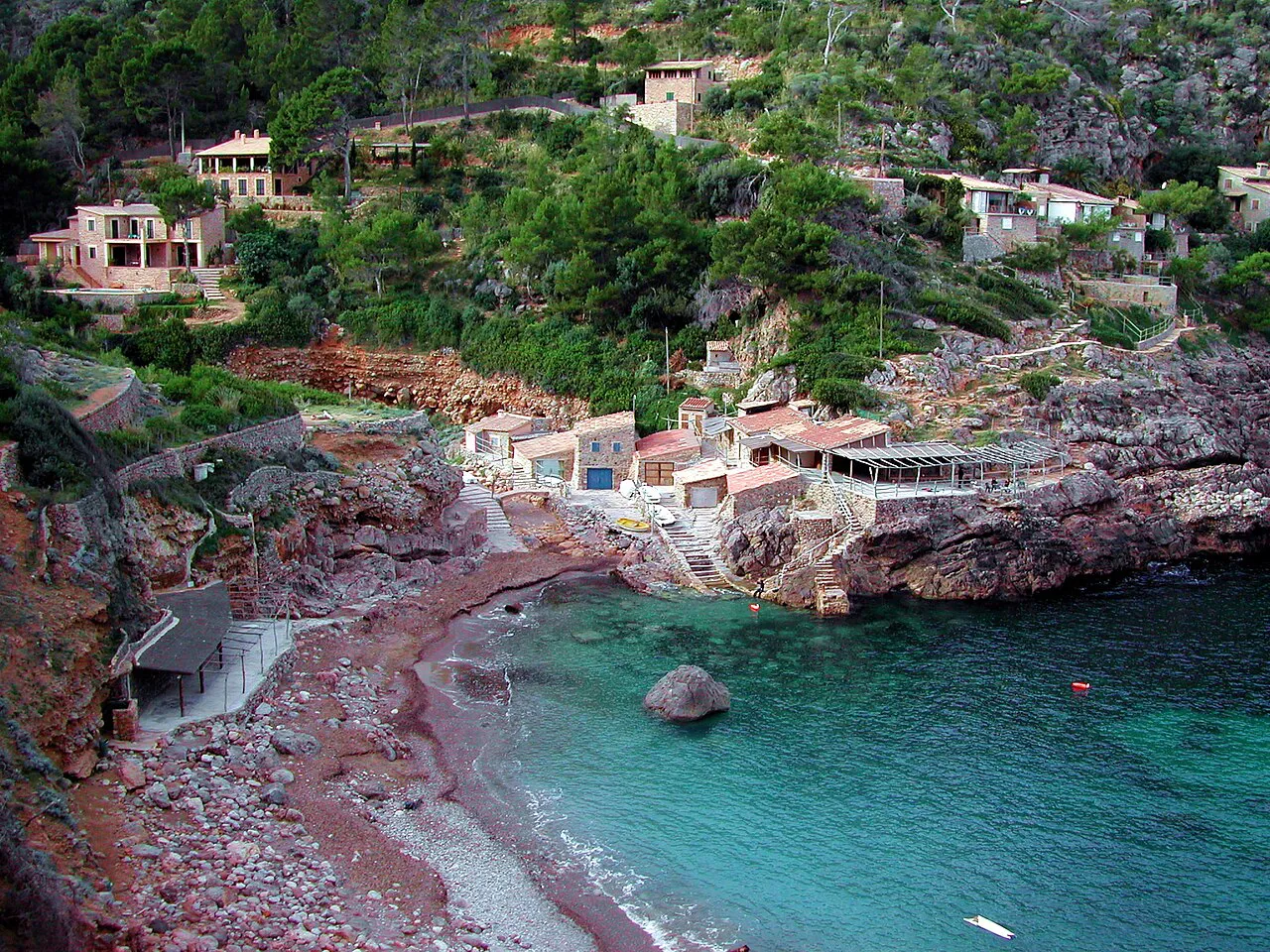
Cala Figuera: harbour interest versus Cala Santanyí beach
The local tourism page places Cala Figuera in southeast Santanyí and describes a fishing and sports port at a rocky coastal entrance. It names Cala Santanyí separately as a white-sand beach. We would choose between those interests deliberately rather than treat every coastal accommodation result as the same setting.
A harbour-led stay suits a plan built around the port setting itself; a beach-led search starts with the shore you intend to use. For a couple with one of each preference, decide which belongs beside the accommodation and arrange the other as a distinct outing. That gives the choice a purpose without claiming one setting is quieter, cheaper or better for every pair.
Consider one base or a second setting through the actual plan
A second stay is worth considering when both people want a different setting to shape a substantial part of the visit. Keep one base when the contrasting interest works as an outing instead. Compare the practical arrangements for the addresses you are considering before deciding; there is no mandatory number of nights or universal split-stay formula.
Our where to stay guide covers the wider island choice. This couples comparison narrows that search through the interests you share. Keep the extra accommodation booking optional, rather than add it because a city, village and shore checklist says every setting must be covered.
Choose the setting that gives both people a reason to stay
Give the shared interest enough weight to choose the base, and let a contrasting interest be an outing when that works. Then select the actual accommodation around the sleeping, arrival and room requirements of your two-person party.
Frequently Asked Questions
Should couples choose a city or village setting?
Choose through the interest you share: a city-gallery and meal plan may suit different preferences from a literary village visit. Discuss which activity belongs at the centre of the stay before choosing accommodation.
Is Sóller town the same base as Port de Sóller?
The official description separates the town’s architectural and art interests from the port’s promenade and waterfront setting. Choose the named location for the part of the visit you both want to lead.
Does a harbour description mean beachfront accommodation?
A harbour setting does not establish the accommodation’s relationship to a beach or the room’s outlook. Identify the actual address and access you would use, keeping those questions separate from the area label.
Should couples always split their stay?
Add another base when both people want a different setting to shape part of the visit. Keep one when the contrasting preference works as an outing. There is no mandatory split or minimum nights to apply.
How can two different holiday interests shape the choice?
Find one shared priority and give the other interest a deliberate place in the plan. A visit can satisfy that preference without making it the accommodation base. Compare that option before adding another booking.
Sources
You might also like


Continue reading
More guides you'll find useful

.jpg)

