
Where Not to Stay in Naples: Stays to Reconsider
Choose which Naples stay to reconsider through your plans, stair access, arrival arrangements and room capacity, with specific operator examples.
AI-assisted guide · Sources and editorial policy
On this page
Where not to stay in Naples depends on the trip and the particular accommodation you are considering. We would drop an option when the reason for choosing it does not serve the day you want, or when its room and arrival arrangements conflict with an essential requirement. Start with that concrete mismatch before ruling out a whole area.
This guide compares station-led, historic-centre and hilltop choices through specific examples and your intended routine. Use our broader where to stay guide to build the initial shortlist, then return here to decide which offer to reconsider. The goal is a suitable base and room for everyone travelling, with the optional attractions weighed after the essentials.
An early departure can make a breakfast arrangement a poor fit
Le Stanze del Principe’s breakfast arrangement is at the bar beside the palace entrance, from 8am to 10am. If you intend to leave before that window, reconsider choosing the stay mainly for that morning meal. Put your actual departure beside the service you expect to use, and decide whether it has a role in the trip.
Next, decide what the area is supposed to do for the trip. Are you choosing it for a departure, a museum day, time at the hotel or returning between outings? Reconsider a location selected for a purpose you will not use. When two offers both meet the essentials, compare how each supports the planned day instead of searching for a universal rule about which district to avoid.
For two companions with different morning routines, agree whether eating together at the accommodation matters. One may want to leave promptly while the other wants to linger. Compare a departure-day meal plan that works for both, and keep any alternative meal spending alongside the room offer rather than treating an unused breakfast as a benefit.
Reconsider a station-led base when your day has another focus
Starhotels Terminus supplies a concrete station-area example: its operator places it near the train station and gives Piazza Garibaldi 91 as the address. We would investigate that address for a trip in which the station plays a real role. Its position is a reason to compare a route, not a reason every leisure visitor must choose it.
If you will arrive by train and continue elsewhere the next day, put the arrival and departure beside the offer. If your visit is instead built around a different outing, compare that outing and the evening return with another suitable address. Reconsider the station-led choice when the feature that brought it onto the shortlist contributes little to your actual stay.
For a brief visit, the choice can change with the order of events. Someone heading directly to an outing has a different routine from someone who wants to settle into the room first. Our one-night guide helps you compare that short-stay decision. Choose through the sequence you intend, rather than giving the station address an automatic advantage.
Historic-centre stairs can make a specific stay unsuitable
At Via Foria 118, Le Stanze del Principe’s own introduction describes second- and third-floor rooms in Palazzo Ruffo di Castelcicala, reached by a piperno staircase. Reconsider that approach when it conflicts with your access requirement.
Distinguish an interest in a historic building from the route your party can use. If someone needs an approach without stairs, settle that requirement before weighing the character of the rooms. If the party can use the approach but wants help with luggage, make the assistance arrangement part of the arrival plan instead of leaving it implicit.
The documented stair example does not settle access at other historic-centre properties. Compare the actual route at your alternative as well. Reconsider an offer when its approach is unsuitable or an essential access answer remains unresolved; keep a suitable room in consideration when the route works. The building description should support that decision, rather than replace it.

A late arrival needs a matching reception arrangement
Le Stanze del Principe’s arrival conditions give ordinary check-in as noon–7pm, with special requirements arranged before booking. They describe paid late check-in through 1am. Reconsider an arrival outside those arrangements before choosing the room.
Use the arrival you realistically expect, including any stop before reaching the accommodation. An attractive room does not resolve how you enter it. If your plan depends on an arrival outside the ordinary window, settle the particular arrangement before committing; an unanswered request is still an unresolved part of the choice.
Compare an alternative whose arrival arrangement fits the same plan. Keep any extra charge beside the offer you evaluate, rather than deciding from the room total alone. For a stay that is mostly arrival, sleep and departure, a workable entry arrangement may deserve more weight than an optional feature you would have little time to use.
Vomero: compare the return route rather than assume a nightly climb
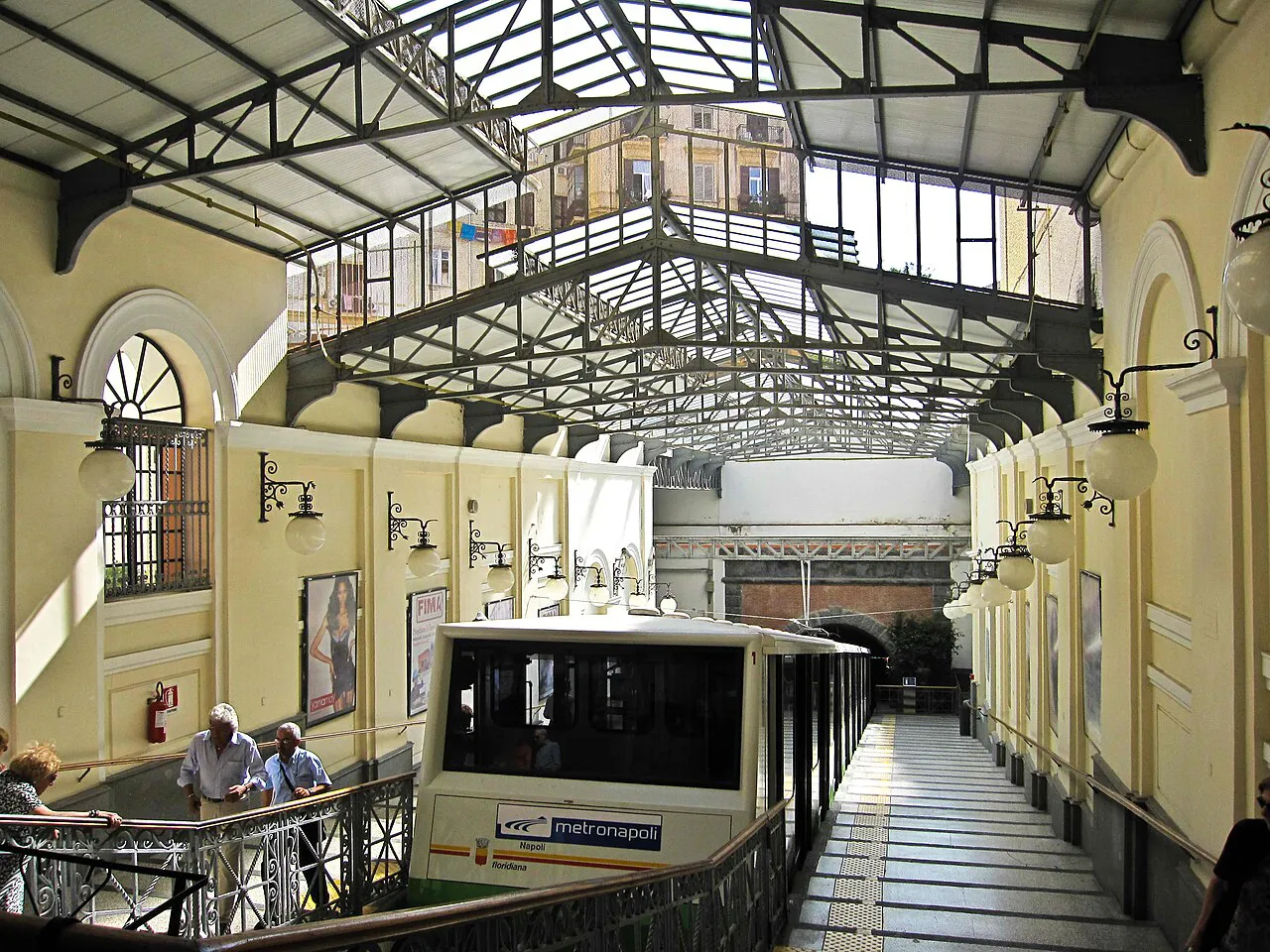
ANM’s Funicolare Centrale page identifies its upper station at Vomero. That is a specific transport reference to investigate for a hilltop-base plan. It does not establish the approach to your proposed hotel or guarantee the service for the moment you intend to use it.
Reconsider the hilltop choice if the complete arrival and return arrangement conflicts with your party’s needs. Work from the particular address: how you intend to reach it, where you would change mode if needed, and the final approach to the entrance. Treat those as parts of one proposed journey rather than making the district name answer them.
Try the two versions of the visit in your itinerary: an outing followed by returning elsewhere, or a day that ends back at your proposed Vomero address. Retain the hilltop base when that return is part of what you want and the specific route works. Reconsider it when you would prefer another evening destination or cannot make the arrival arrangement suitable.
A larger suite can still be the wrong room for the party
Terminus’s room overview lists Junior Suite at 41 square metres and Suite at 45, both for a maximum of two guests. Family Room is 26–28 square metres for up to four. We would rule out either two-person suite for a four-person booking, rather than treat extra floor area as permission to add guests.
Count everyone staying before comparing space. Then decide who needs an individual sleeping surface and who is comfortable sharing. A stated party limit settles which categories to investigate, while the actual bed arrangement settles which is suitable for the people travelling. Keep both questions visible beside the accommodation offer.
For two travellers, floor area may matter because you plan to unpack fully or spend time inside. For a larger party, suitable capacity comes first. Reconsider the room when its published limit excludes someone, even if its name or photographs suggest a generous setting. Compare the categories that actually accommodate the party before considering an upgrade.
A courtyard outlook does not certify a quiet stay
The Terminus operator describes city or courtyard outlooks among its rooms. That gives you an orientation to compare, rather than a guarantee about sound. We would choose the outlook as a view preference and discuss a particular sleeping requirement separately.
If quiet is essential, avoid making the whole decision from the word courtyard or from a district’s reputation. Describe the requirement you need the particular room to meet. Reconsider the offer if that condition remains unresolved, rather than rely on an attractive orientation label to answer a different question.
Two companions can prefer different outlooks while sharing the same sleeping requirement. Settle the latter first, then choose the view you would enjoy during time in the room. This makes it easier to drop an unsuitable offer without discarding an entire area or assuming every room at the same address behaves alike.
Separate a stay mismatch from current safety guidance
The UK government’s Italy travel advice recommends care on public transport, in crowded areas and at main train and metro stations, with attention to belongings. This is country-level guidance, not a Naples hotel or district crime ranking. Use current official advice for the safety question while comparing accommodation through its actual route and room arrangements.
Make the final comparison between two workable offers. State which condition each answers and which part of the intended day changes. Reconsider the option with an unresolved essential requirement; among suitable choices, keep the one whose location role and room routine better serve your trip. That gives the negative-area search a practical outcome: an offer you can drop and a reason you can explain.
Drop the unsuitable arrangement and keep a workable alternative
Reconsider a base when its location role contributes little to the trip, and a room when stairs, arrival conditions or party limits conflict with your needs. Compare the particular alternative through the same intended day. Choose a workable route and sleeping arrangement first, then give an outlook or building style the weight it deserves in your own plans.
Frequently Asked Questions
Should every traveller avoid staying near Napoli Centrale?
Choose through the role of the station in your trip and the particular hotel address. Reconsider a station-led base when your actual days give you a stronger reason to stay elsewhere.
Does a historic-centre address settle room access?
No. Le Stanze del Principe describes an upper-floor stair approach. Assess the actual route at each alternative before choosing the room.
Can I assume a late arrival fits any guesthouse?
Match the arrival to the particular published arrangement and settle any needed exception before booking. An unresolved late-arrival request remains a reason to reconsider the offer.
Does a larger suite necessarily accommodate more people?
No. Terminus lists its 41-square-metre Junior Suite and 45-square-metre Suite for two, while Family Room is listed for up to four. Use the category’s party limit.
Does a courtyard outlook guarantee quiet?
No. Treat outlook as an orientation choice, and address any essential sleep requirement separately for the particular room.
Sources
- Terminus actual station address and courtyard/city orientation
- Terminus actual room-party categories, suite not larger party by default
- Le Stanze del Principe actual historic-centre floors, stair approach and arrival rules
- ANM actual Funicolare Centrale upper station at Vomero, not live service availability
- Current government Italy guidance on crowded public transport and belongings
You might also like

Continue reading
More guides you'll find useful




.jpg)