
Boutique Hotels in Barcelona: Buildings, Design and Setting
Compare Barcelona boutique hotels by historic buildings, design details and guest-described settings, then choose the character you want from your stay.
AI-assisted guide · Sources and editorial policy
On this page
Boutique hotels in Barcelona, Spain, offer different reasons to choose them. You might want the building’s history to be visible, decorative interiors to shape the experience, or a contemporary hotel with an intimate feel. Our recommendation is to choose one of those priorities before comparing the setting and the room.
Mercer and Hotel Neri’s own descriptions anchor the historic-building and room-design comparisons. Sally Davies’s 2016 Luxury Travel Advisor guide provides the other dated design references, while guest comments add separately attributed impressions. Our Barcelona neighborhood guide can help you decide where to stay alongside the hotel character you prefer.
Mercer: Roman and medieval structure with contemporary art
Mercer’s operator places the hotel in the Gothic Quarter on Carrer Lledó, in historic buildings restored under architect Rafael Moneo. Its profile describes construction on part of ancient Barcino’s Roman wall, with preserved medieval arches and recovered twelfth-century frescoes. We would compare Mercer if preserved architectural layers are the main attraction, rather than a general historic-looking interior.
The operator also identifies eighteenth-century wooden ceilings and two fourteenth-century semicircular arches in the atrium. Its design account pairs these historical elements with restrained contemporary furniture and expressionist art by Agustí Puig. This is a specific old-and-new comparison: the attraction is both the preserved structure and the way contemporary pieces sit within it.
We would put Mercer on a shortlist when you want to notice the building as you move through the hotel. Compare the historical elements that interest you with the actual room presentation, because the profile does not make every room an identical architectural space. A Tripadvisor guest adds a separate impression of a historic-building hotel on a quiet, mostly pedestrian Gothic Quarter street.
Hotel Neri: a medieval palace and a restrained room palette
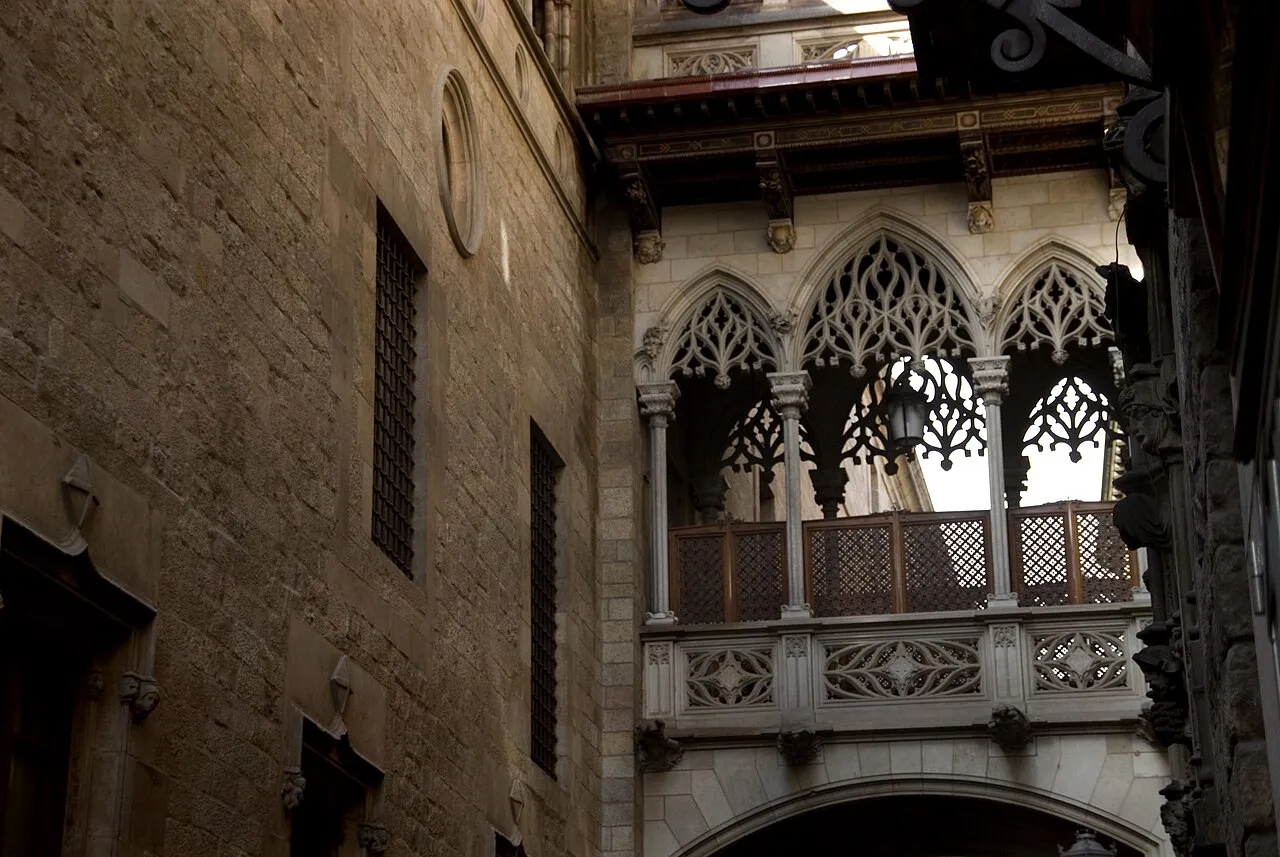
Hotel Neri’s operator describes two historic buildings in the Gothic Quarter, including a twelfth-century medieval palace. It identifies a revealed old courtyard and original sgraffito wall decoration. We would compare Neri when the attraction is a layered palace setting with contemporary interior design.
For the room itself, the operator describes both Classic and Deluxe rooms in neutral tones, with wooden floors, delicate fabrics and views toward Gothic Quarter streets. Deluxe rooms are described as offering more space, without dimensions in this account. That gives a concrete category comparison based on palette, materials and relative space, rather than extending a feature from another suite or apartment.
Neri also describes room photographs from the La Mirada Transeúnte collection and credits Virginia Figueras and Franco Corada for an interior design that engages with the historical setting. We would compare its neutral room palette and photography with Mercer’s contemporary furniture and expressionist art. The useful choice is which interpretation of a historic building you prefer spending time in.
Hotel Bagués: a showroom origin and decorative materials
Hotel Bagués brings a different origin: Davies described the building as a former jewelry-company showroom. Her design account combined animal print, Venetian glass and gold finishes, with a small display of the original Bagués-Masriera collection. We would investigate it if material detail and ornament are central to your idea of a distinctive hotel.
Grand Hotel Central: a 1920s building and Art Deco references
Grand Hotel Central was her example of a refashioned 1920s property with Art Deco character, between the Gothic and Born areas. That is a different reference point from Bagués’s decorative mixture. We would compare it when the appeal is a particular architectural era rather than the exuberance of jewelry-house materials.
Hotel España or Pulitzer: an inn’s history or a materials palette
Davies traced Hotel España Ramblas to its beginnings as a nineteenth-century travelers’ inn. Her room account described large illuminated headboard photographs and a compact feel. We would investigate it when the hotel’s lodging history appeals, while comparing the selected room rather than treating the inn origin as a room-layout specification.
Her Pulitzer account placed it just off Plaça Catalunya, with white leather and patterned rugs in the lobby, and wood, leather and satin in the bedrooms. A separately featured Tripadvisor guest calls Pulitzer a stylish boutique hotel with a relaxed rooftop. We would compare these references if textures and shared-space atmosphere matter more than the age of the building.
A contemporary boutique feel: EDITION, Kimpton or Mirlo
A Tripadvisor guest describes The Barcelona EDITION as elegant and understated; another highlights a small, cozy boutique feel. Those are guest judgments about atmosphere, rather than room-count facts. We would compare it when you want intimacy of feeling without making a historic-building origin the main selection criterion.
Kimpton Vividora’s featured comments describe a modern boutique hotel, while a Hotel Boutique Mirlo guest highlights well-appointed rooms, a quiet atmosphere and attractive outdoor space. These give different contemporary comparison points: modern style at Kimpton, or the guest-described setting at Mirlo.
Forbes Travel Guide describes The Barcelona EDITION as contemporary elegance in El Born. We would use that area association when comparing the hotel’s address with your plans. Boutique feel can be a useful preference even when you have not chosen a particular historical period or decorative style.
Eixample: compare a quieter-street impression with an individual palette
A Seventy Barcelona guest on Tripadvisor describes an Eixample setting on a quieter street, while another praises the combination of design elements. We would compare it when the hotel’s design and the immediate street both belong in your decision.
Davies placed Villa Emilia in Eixample just off Gran Via, and described rooms in autumnal colors with artworks above the beds. Her account also characterized it as less central but near public transport. This gives you a different location-and-palette reference, with an individual address to compare rather than assuming every Eixample hotel serves the same routes.
Our Hotels in Eixample, Barcelona guide can help continue the area comparison. Decide whether the address supports your daily plans before letting a room palette settle the choice. A boutique preference becomes more useful when it is attached to the part of the city you actually want to use.
Compare the actual room experience, not a small-hotel stereotype
The historical design account described compact rooms at several properties, while a Tripadvisor Sixtytwo Hotel guest praises good-size rooms. These are different kinds of observations, not comparable measurements. Our recommendation is to compare the exact room arrangement you want instead of assuming boutique always means small or that every room matches one guest’s experience.
Give your shortlist one clear design requirement: visible old architecture, a decorative palette, Art Deco references or a contemporary feel. Then compare the specific room’s space, windows and layout with your needs, using its current description. Keep property facilities as a separate check if they matter; the building’s history and a guest’s praise cannot supply those details.
Choose a character you want to return to
Our recommendation is to compare two hotels with a shared attraction, then use their setting and selected room to decide. Start with the historical-building, decorative or contemporary-feel comparison that interests you most. The useful shortlist connects a character you enjoy with the accommodation and address you want.
Frequently Asked Questions
Which area of Barcelona is best for a boutique hotel?
Choose the hotel character and the address together. Mercer and Neri’s operators place them in the Gothic Quarter; Forbes Travel Guide places The Barcelona EDITION in El Born; Eixample candidates include Villa Emilia and Seventy Barcelona. Our recommendation is to compare the specific setting alongside the design you prefer.
Which boutique hotels have distinctive historical buildings?
Mercer’s operator describes Roman-wall remains, medieval arches and recovered twelfth-century frescoes. Hotel Neri’s operator describes two historic buildings, including a twelfth-century medieval palace. Choose which architectural details you want to notice during your stay, then compare the named room rather than assuming the whole building gives every bedroom the same character.
Does boutique mean a hotel has very few rooms?
Use the label as a starting preference, not a room-count specification. A Tripadvisor guest highlights The Barcelona EDITION’s small, cozy feel, but that does not state its inventory. Our suggestion is to choose the atmosphere you want and compare the actual accommodation.
Are Barcelona boutique hotel rooms always small?
A boutique label does not determine a bedroom’s dimensions. Our recommendation is to compare the named category’s size and arrangement for the people sharing it, rather than select from one adjective in a hotel-level description.
Which hotels should I compare for decorative or Art Deco character?
Compare Hotel Bagués and Grand Hotel Central for those different design preferences. Decide whether you want ornament to be a leading part of the room experience or are drawn to a particular architectural era, then compare the bedroom you would select alongside the property’s shared interiors.
What should I check before choosing a boutique hotel?
Compare two addresses and the rooms you would actually select. Check whether the design feature you like belongs to that room or a shared space, and whether the layout meets your needs. Confirm any essential facility separately; historical origins and guest atmosphere comments do not establish current access.
What is the room-design difference between Mercer and Hotel Neri?
Mercer’s operator pairs historic features with restrained contemporary furniture and Agustí Puig’s expressionist art. Neri’s Classic and Deluxe descriptions emphasize neutral tones, wooden floors, fabrics and Gothic Quarter street views, while its room account also mentions photography. We would compare those approaches to contemporary design within historic settings.
Sources
You might also like

Continue reading
More guides you'll find useful


.jpg)
